

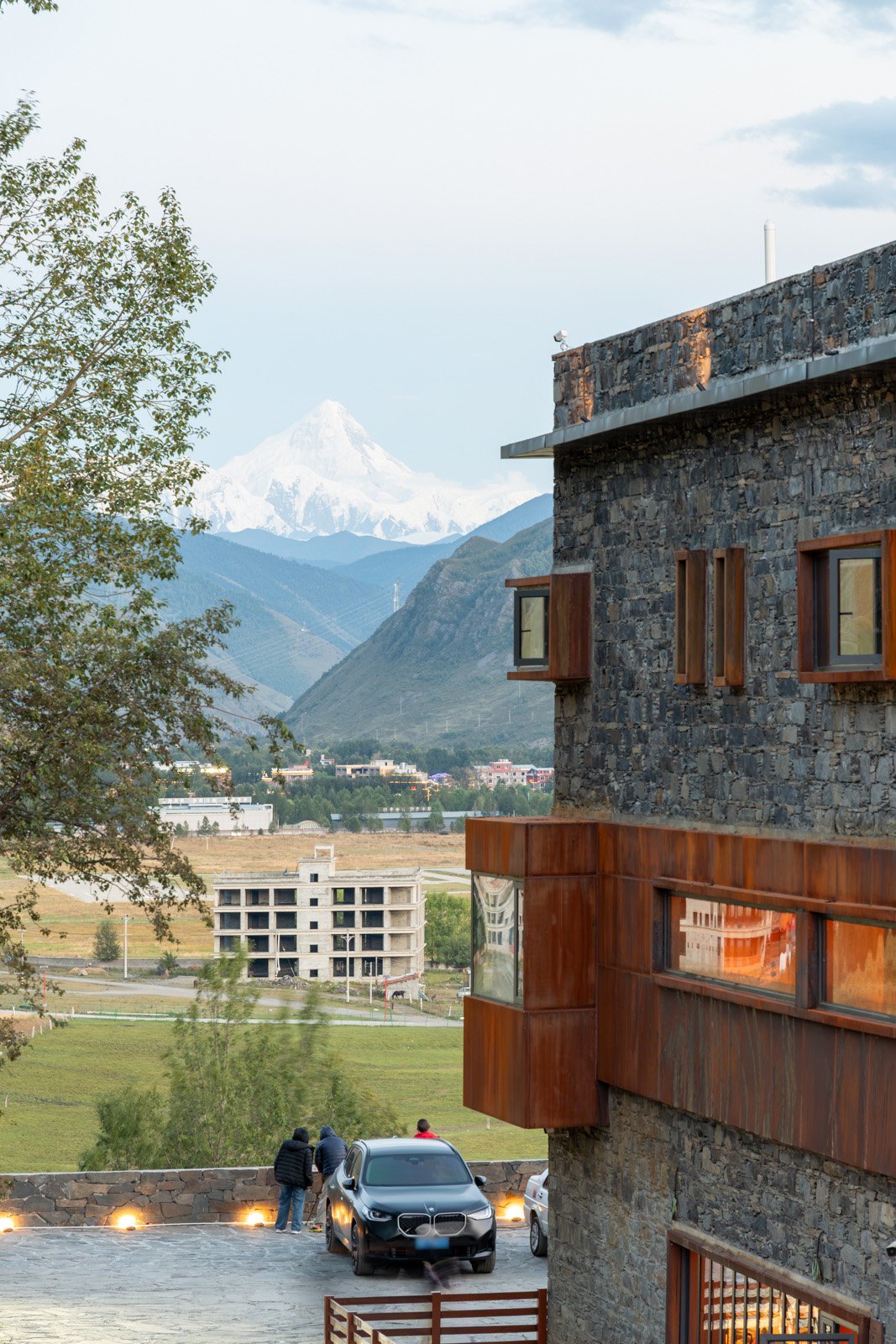
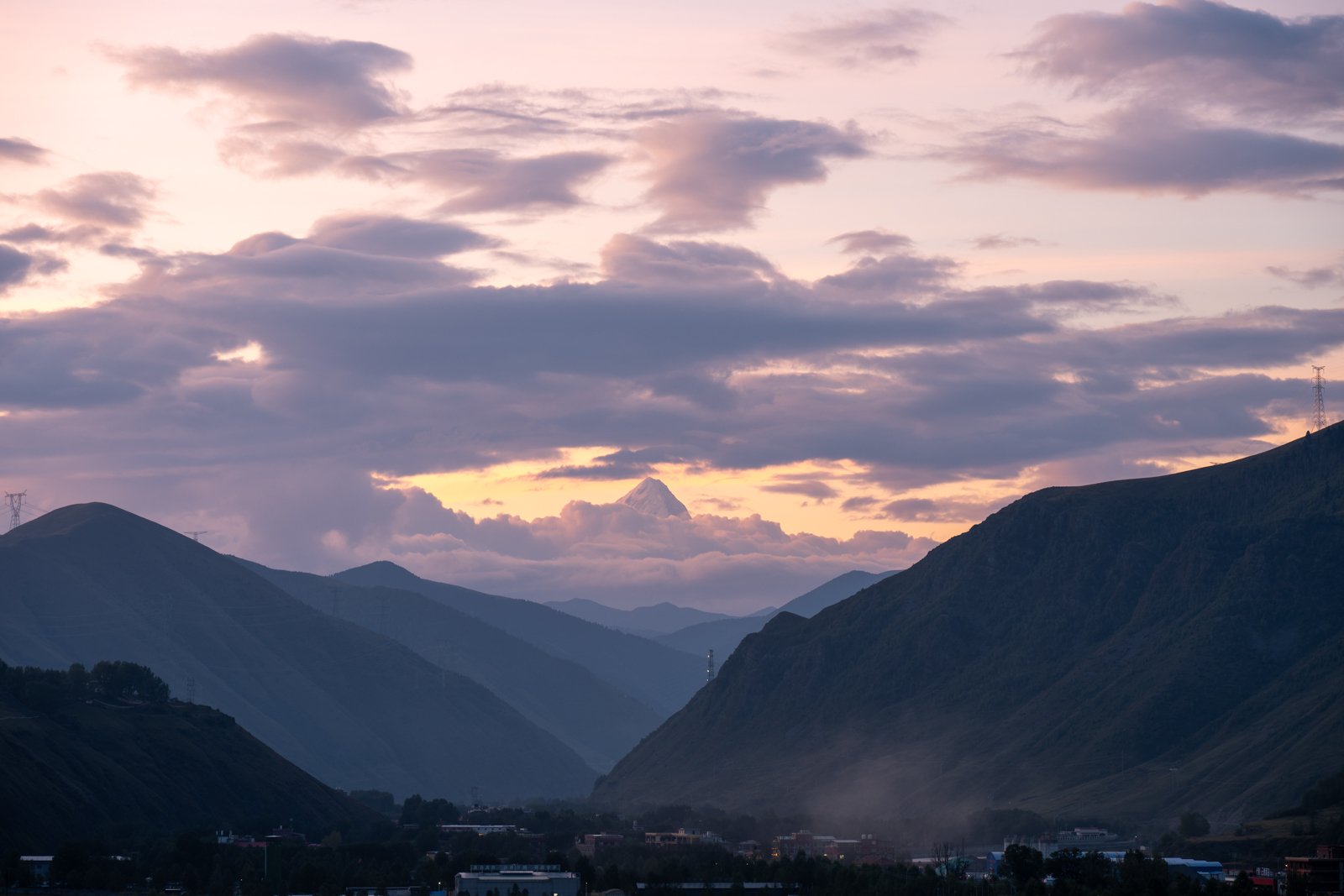
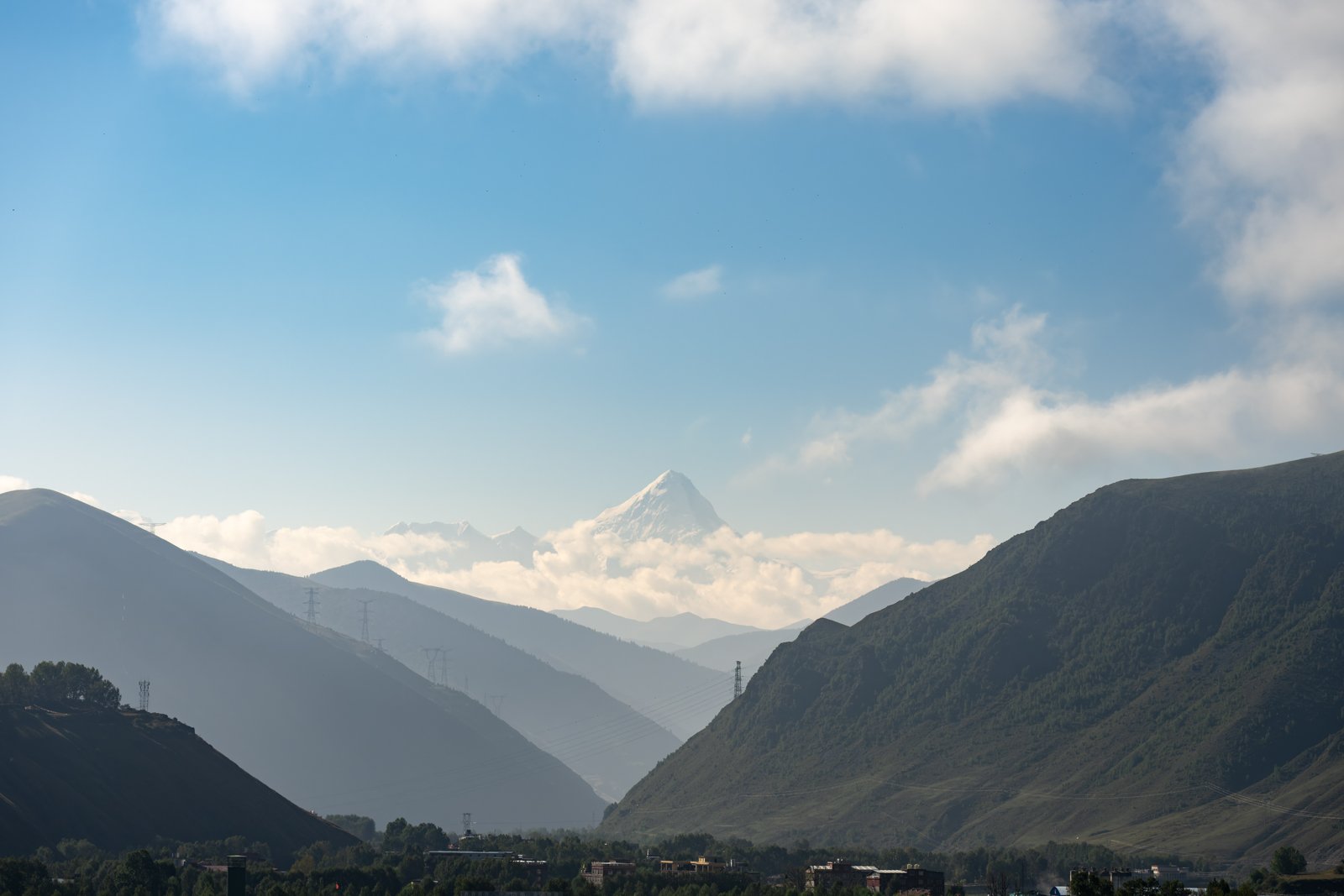
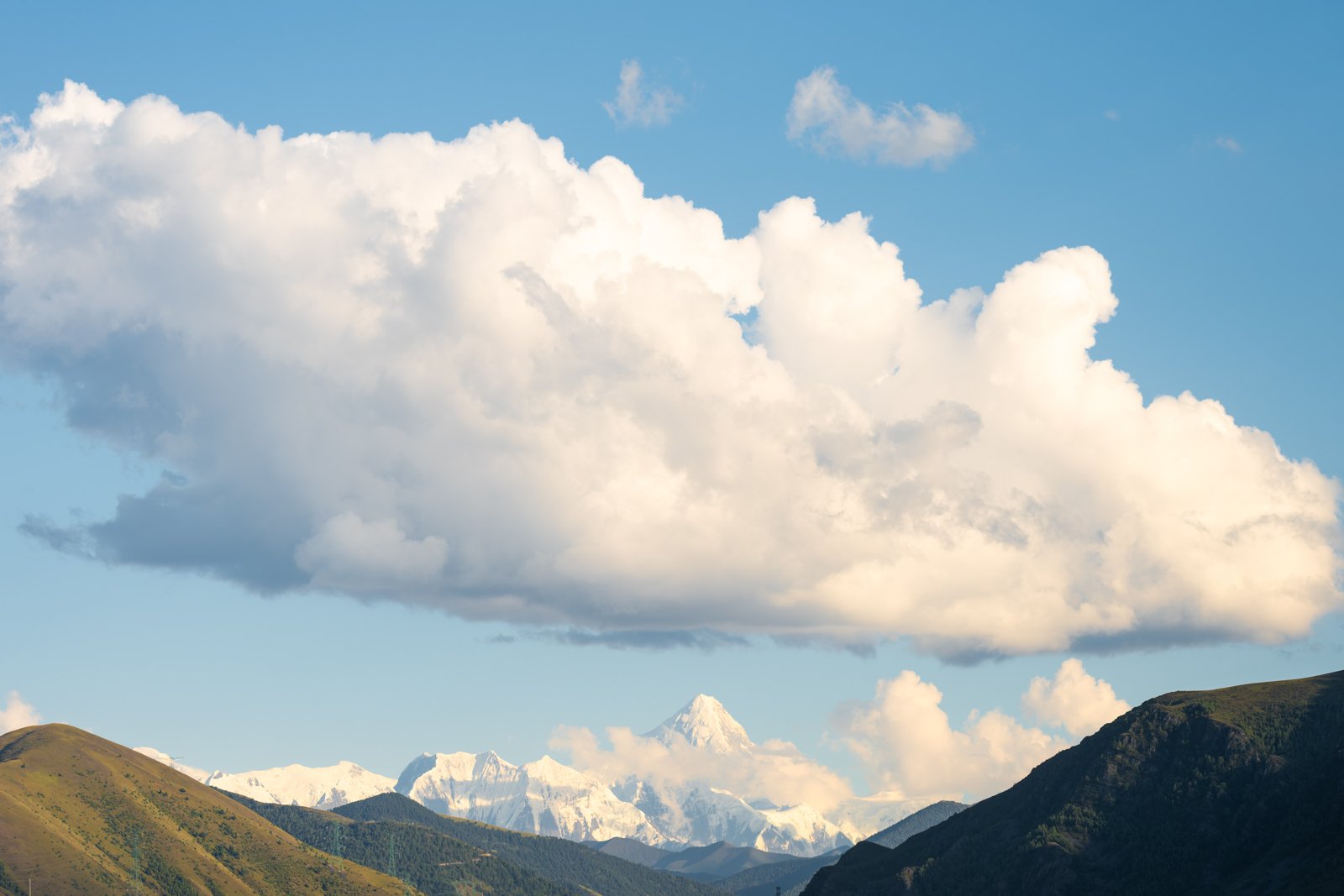
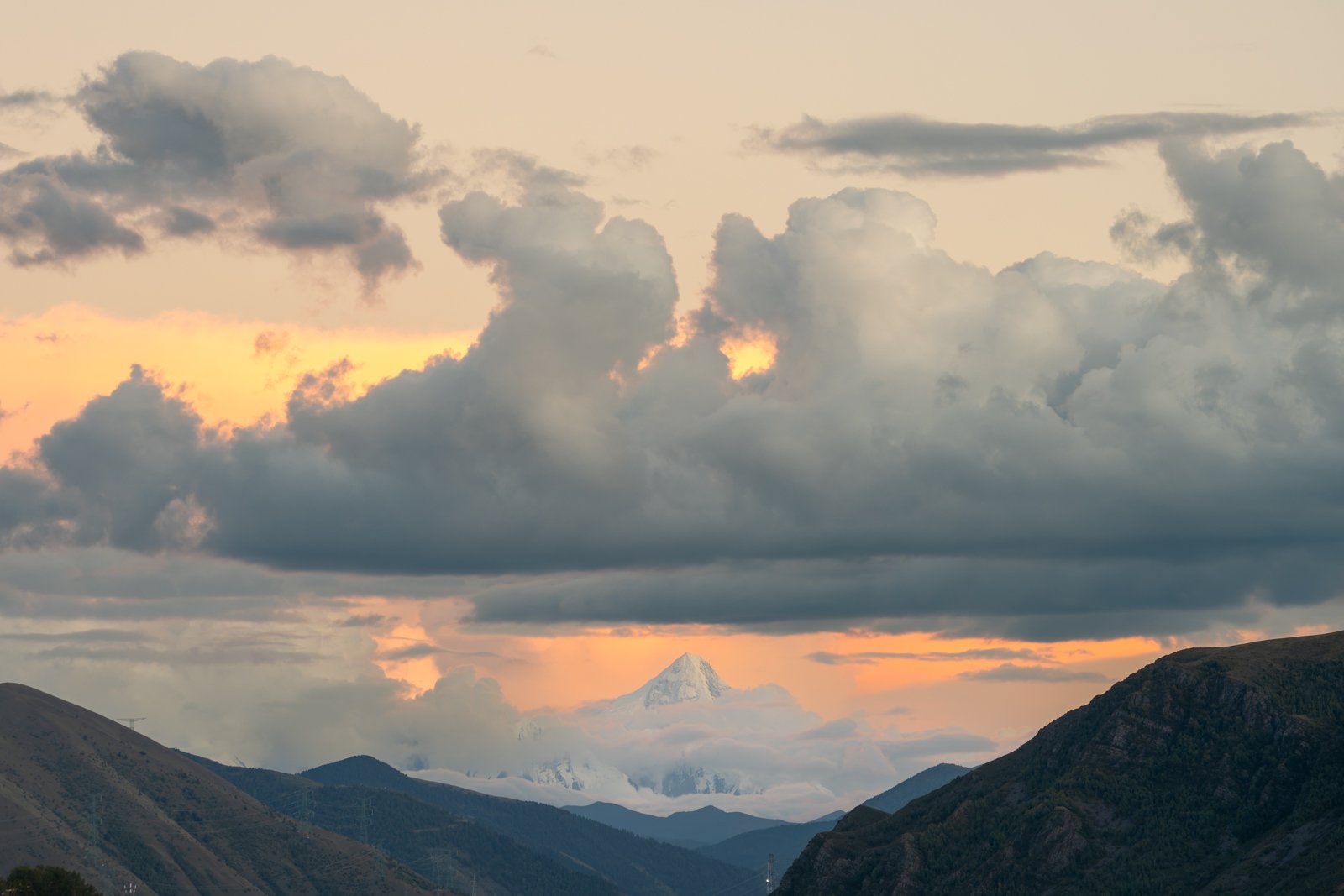
I arrived at Gudao Hotel (古道酒店) in the early afternoon, when the light over Xinduqiao is still soft enough to forgive. The mountain was already visible — Gongga, 7556 meters, the king of Sichuan’s peaks – floating above a layer of haze that made it seem both close and impossible to reach.
The brief was specific: modern luxury rooted in place. The client didn’t want generic hotel photography. They wanted the building to feel like it belonged to the valley, not imposed upon it.
The Architecture
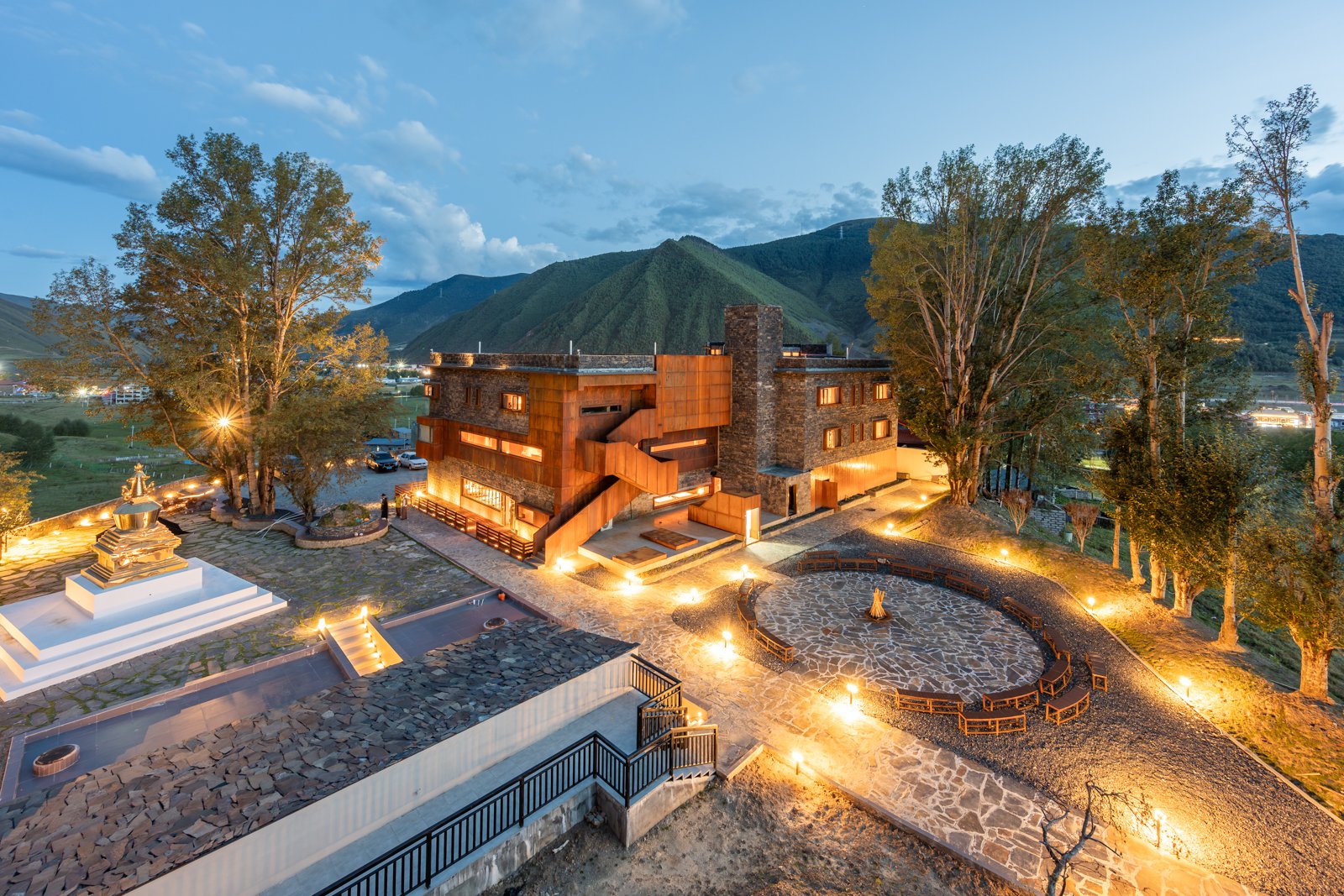
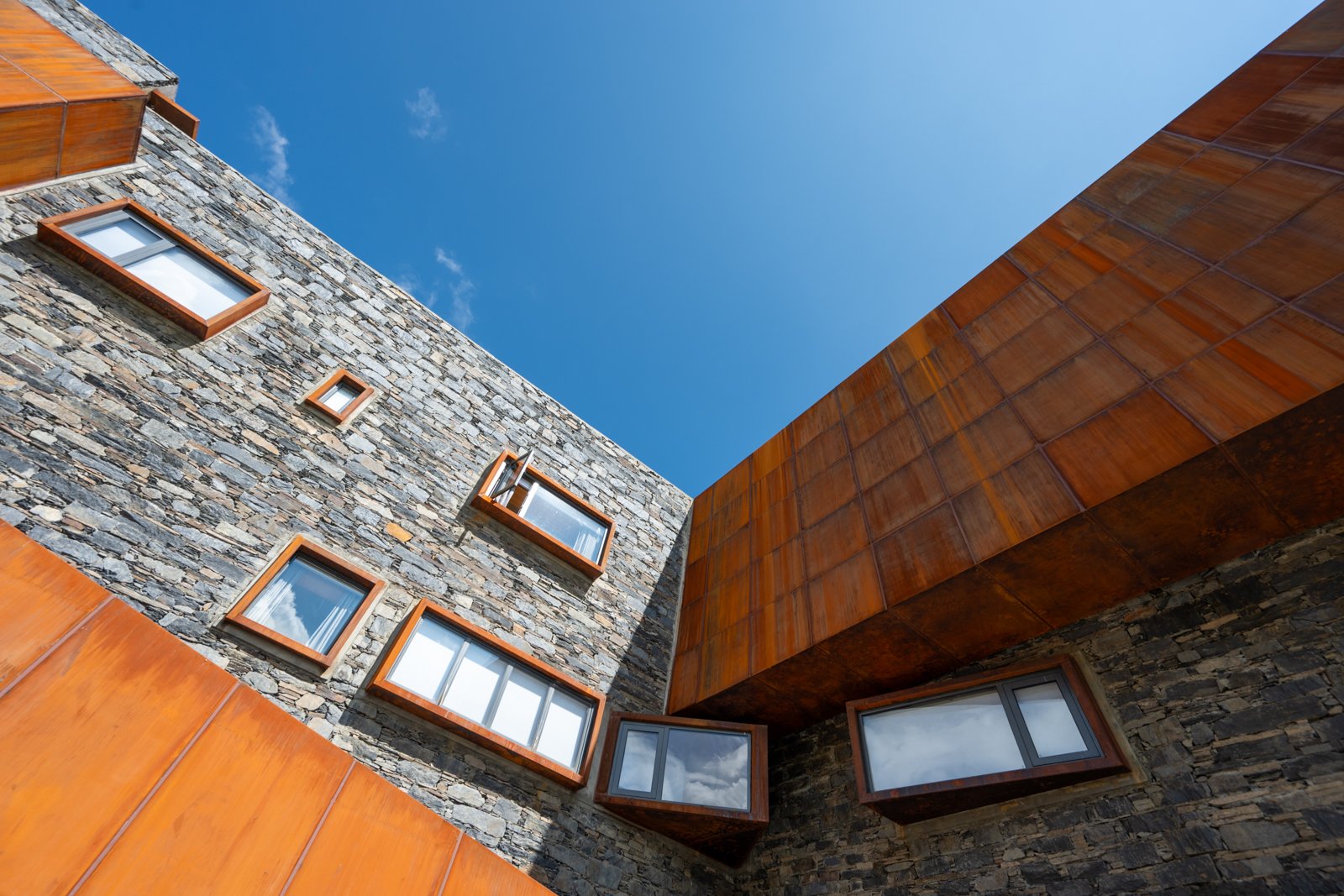
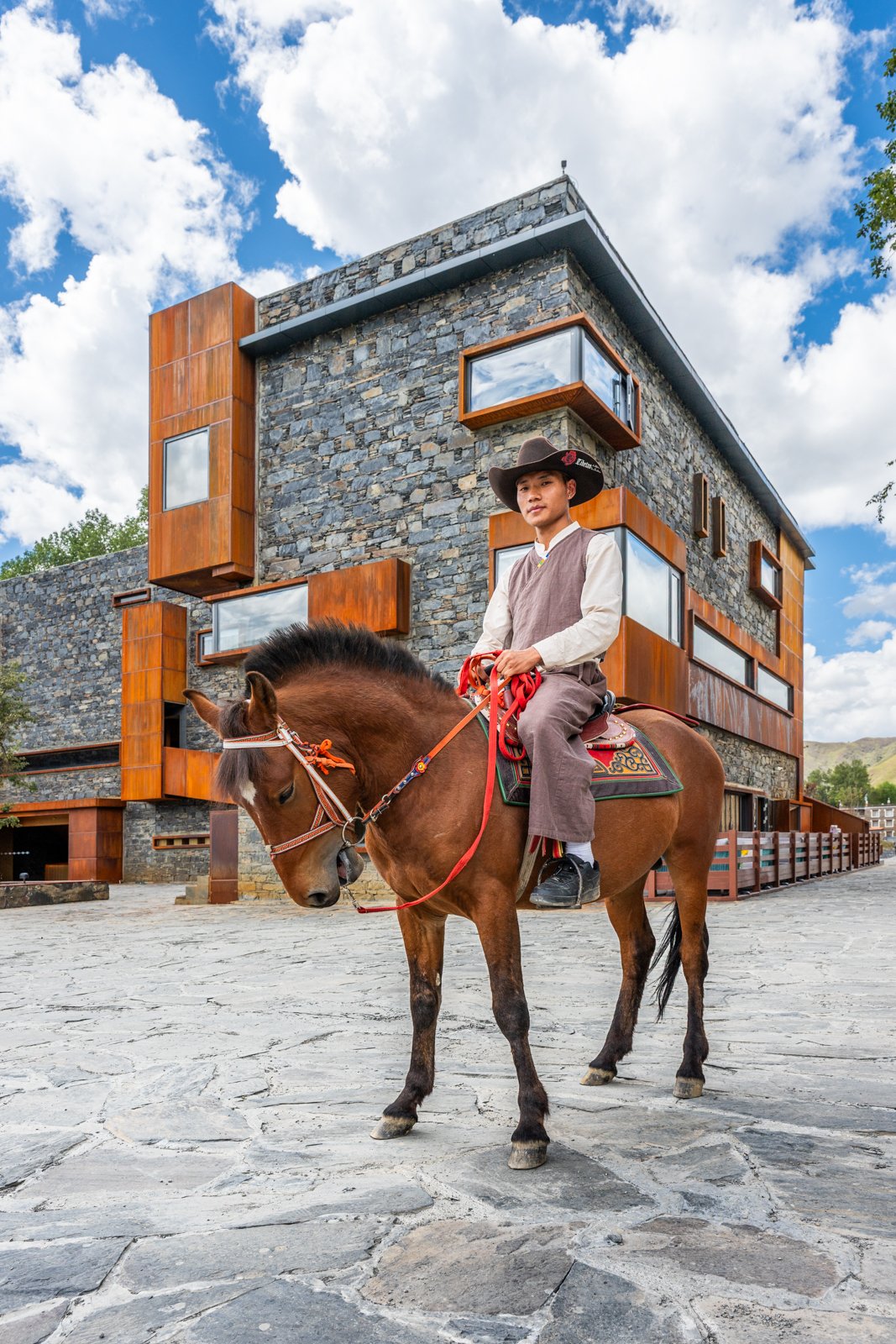
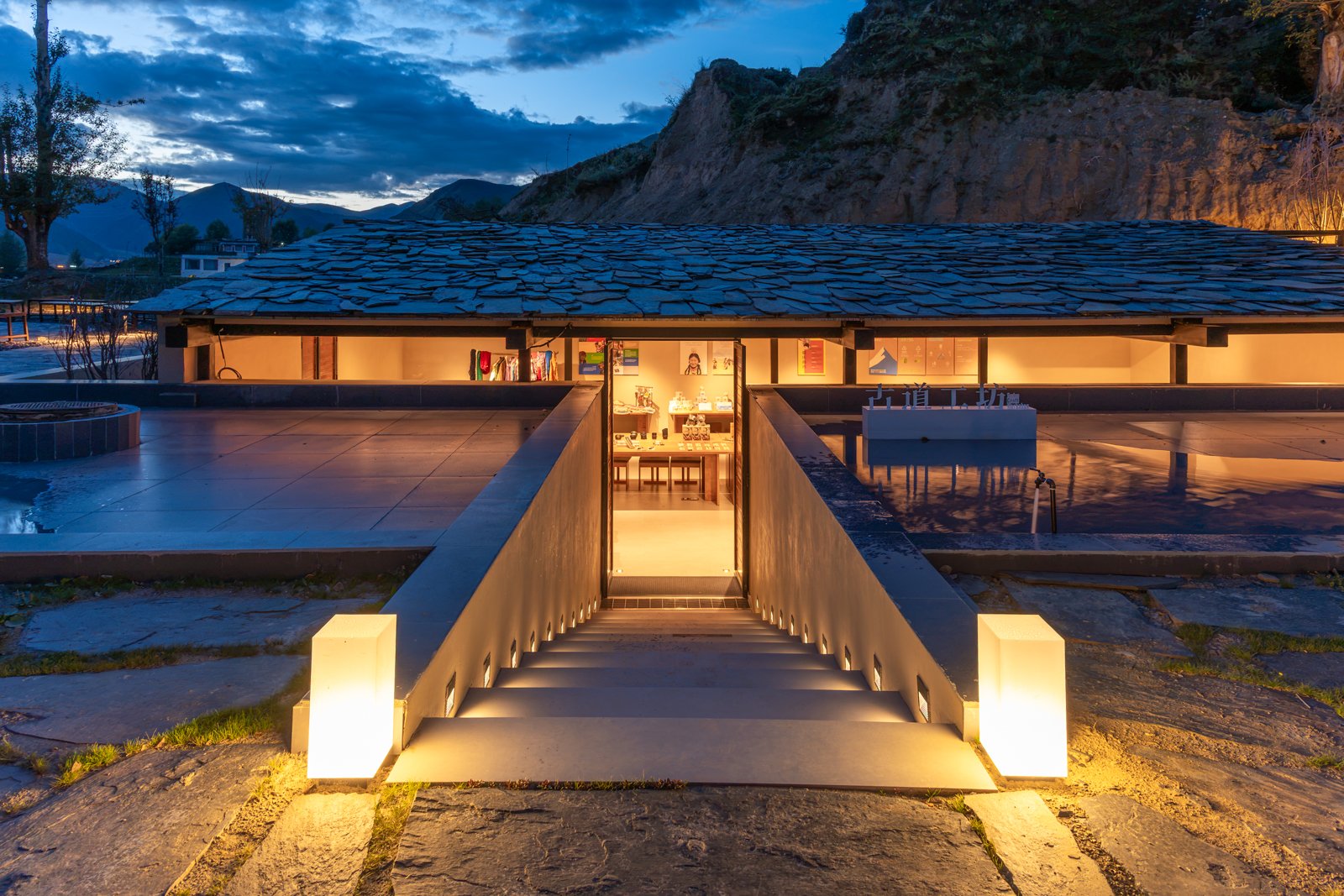
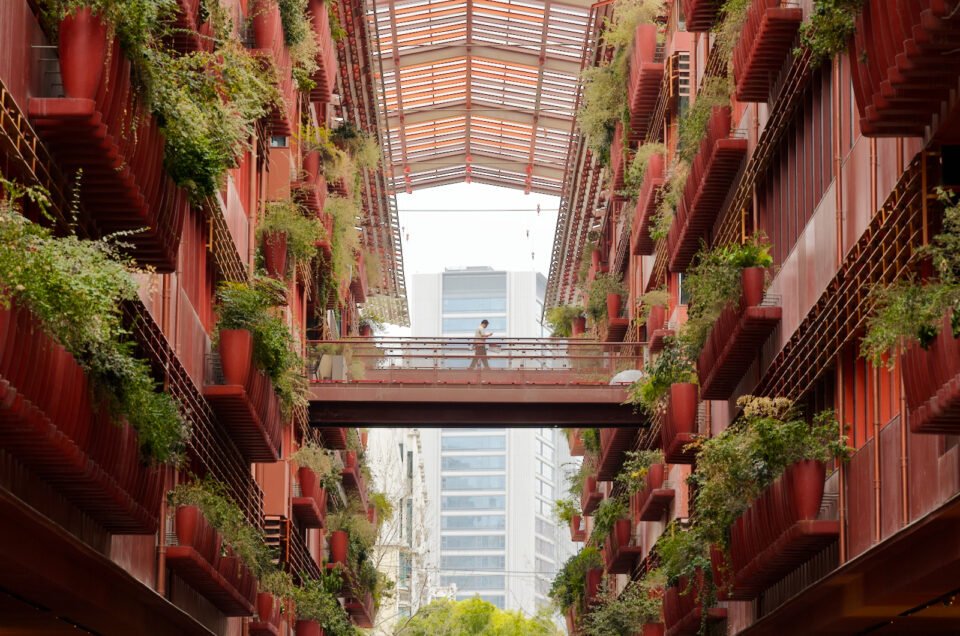
Gudao’s facade is a conversation between local stone and weathered steel. The stone grounds the building – rough, hand-laid, the same material you see in the village walls below. The steel adds something unexpected: a rust-colored geometry that catches the afternoon light and turns it warm.
From certain angles, the building almost disappears into the hillside. From others, it stands apart – a deliberate contrast that somehow doesn’t fight the landscape. The architect understood that luxury in this context doesn’t mean dominating the view. It means framing it.
The Interiors
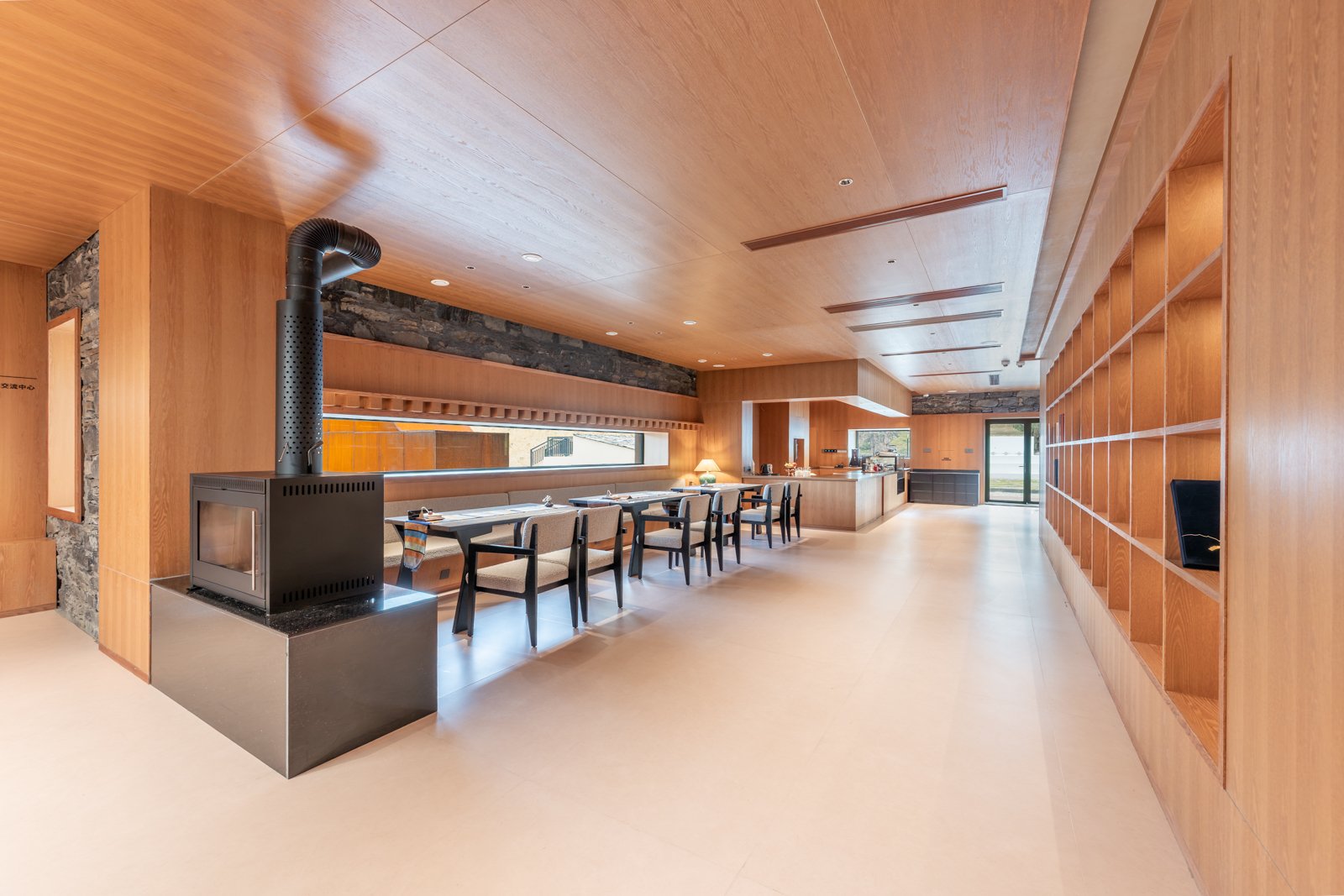
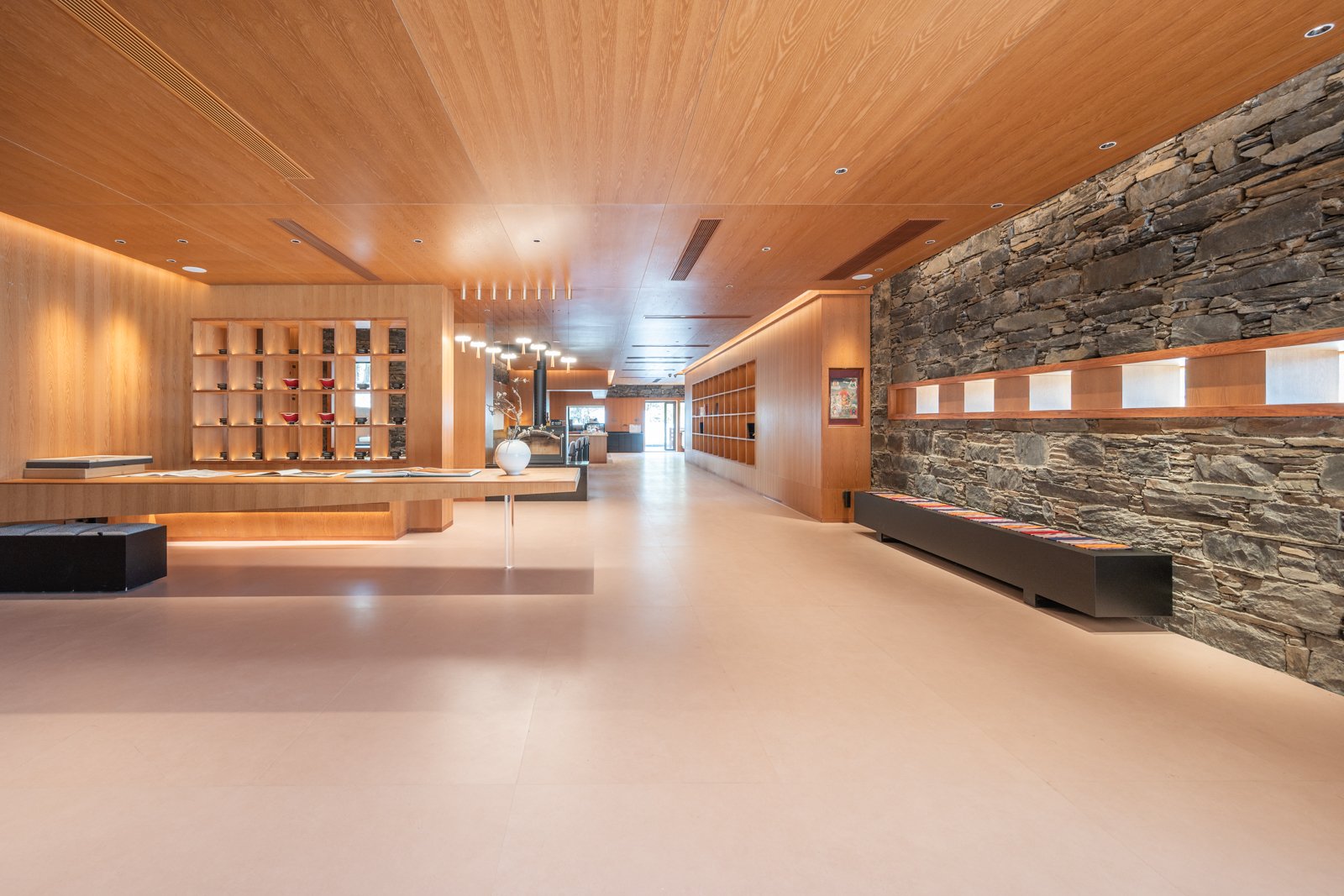
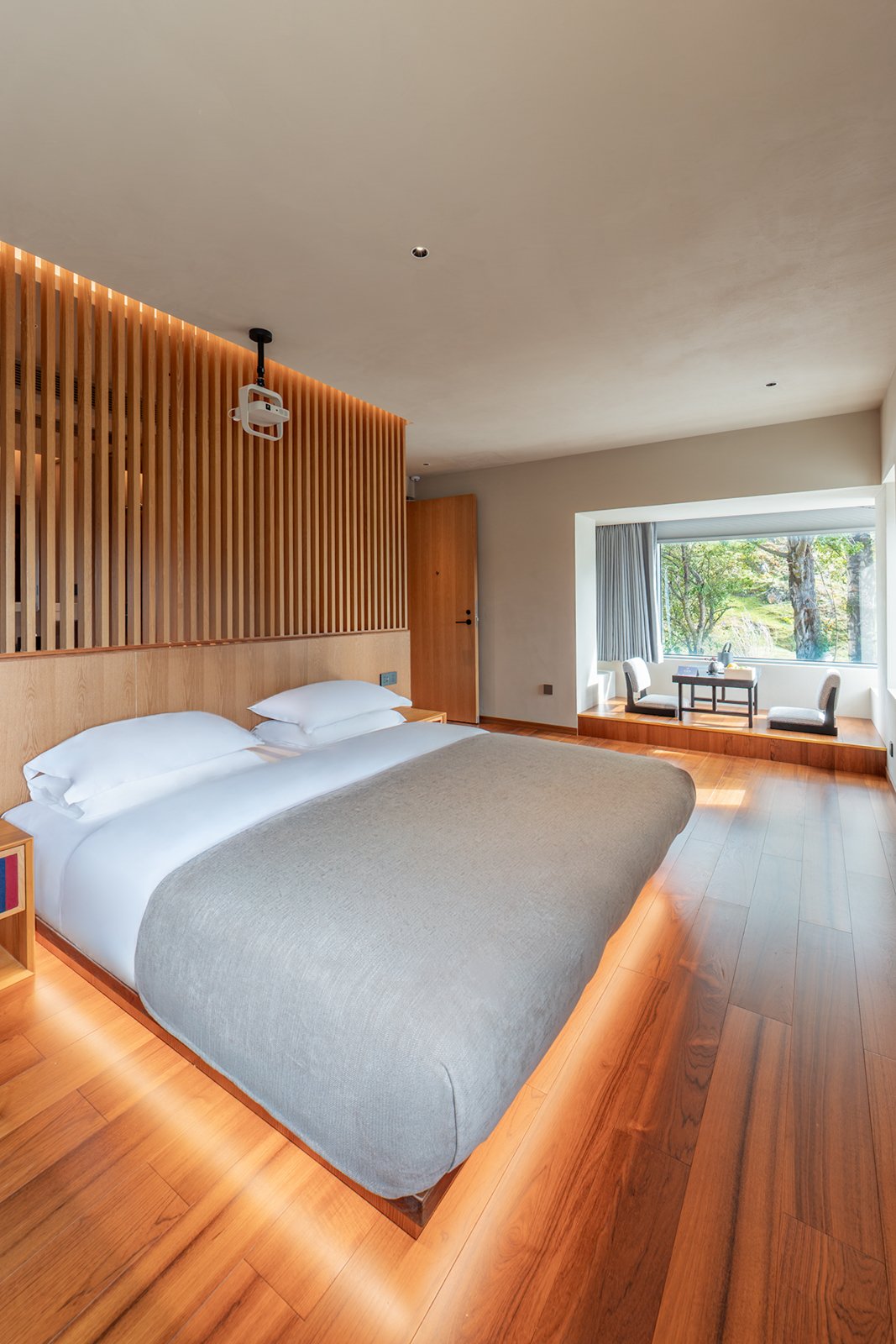
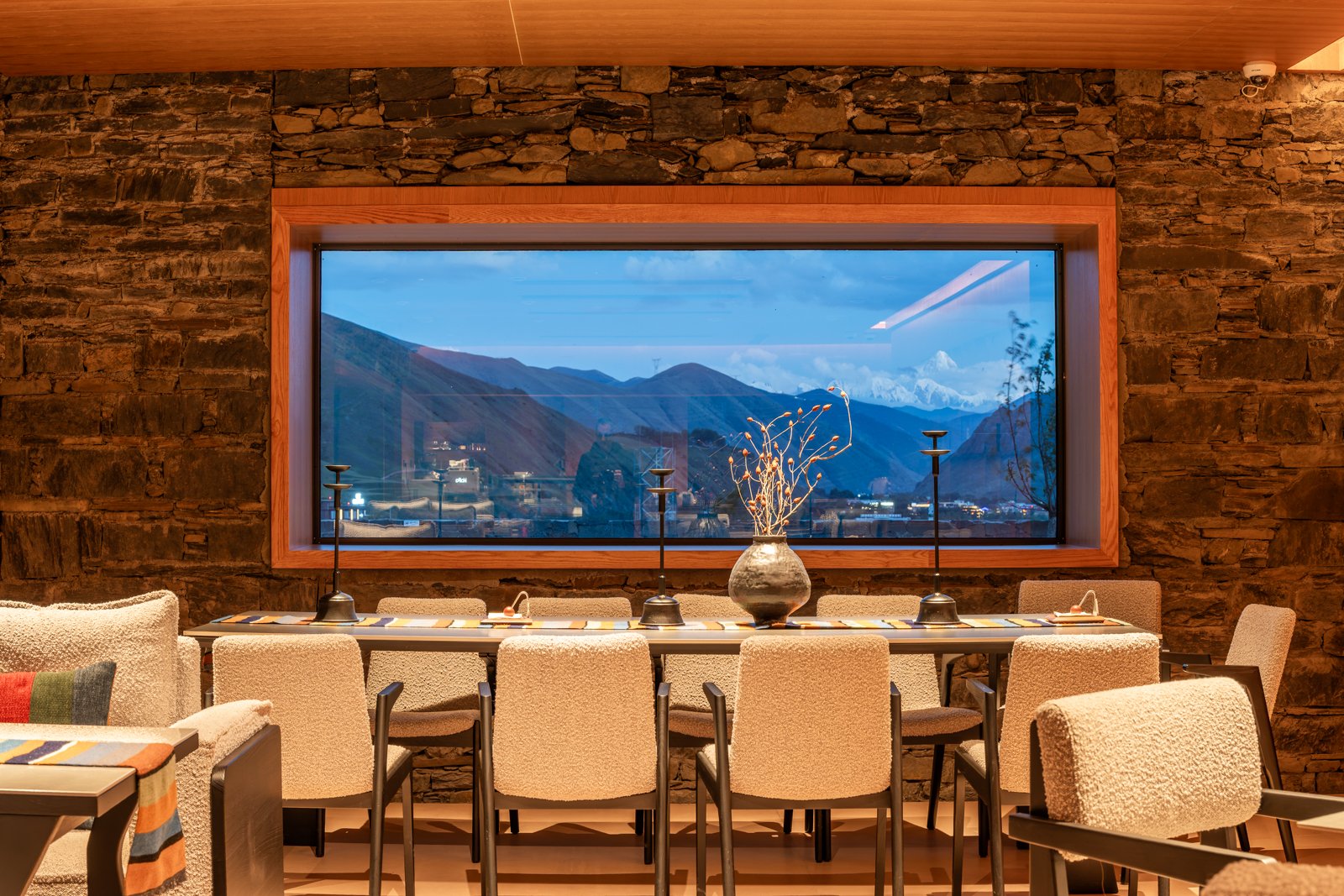
Inside, the material palette narrows: wood, stone, glass. The lobby stretches long and low, with a ceiling of continuous timber that draws the eye toward the windows. Those windows are the point – every significant space in the hotel is oriented toward Gongga.
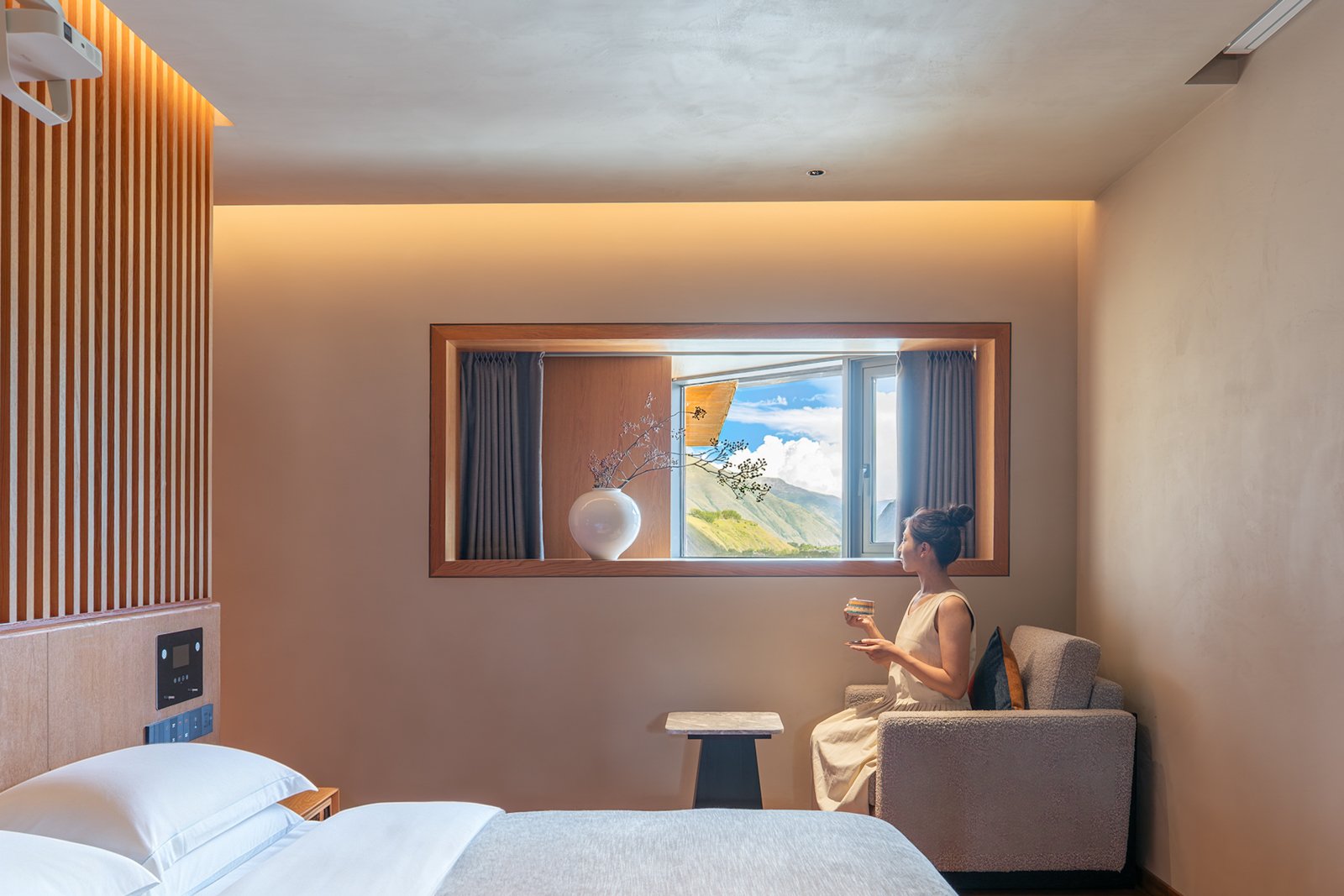
I shot the rooms with available light. The mountain provides its own drama; adding flash would have been redundant. In one room, a woman sat by the window with a cup in her hands, the peak visible over her shoulder. The frame composed itself.
The Evening
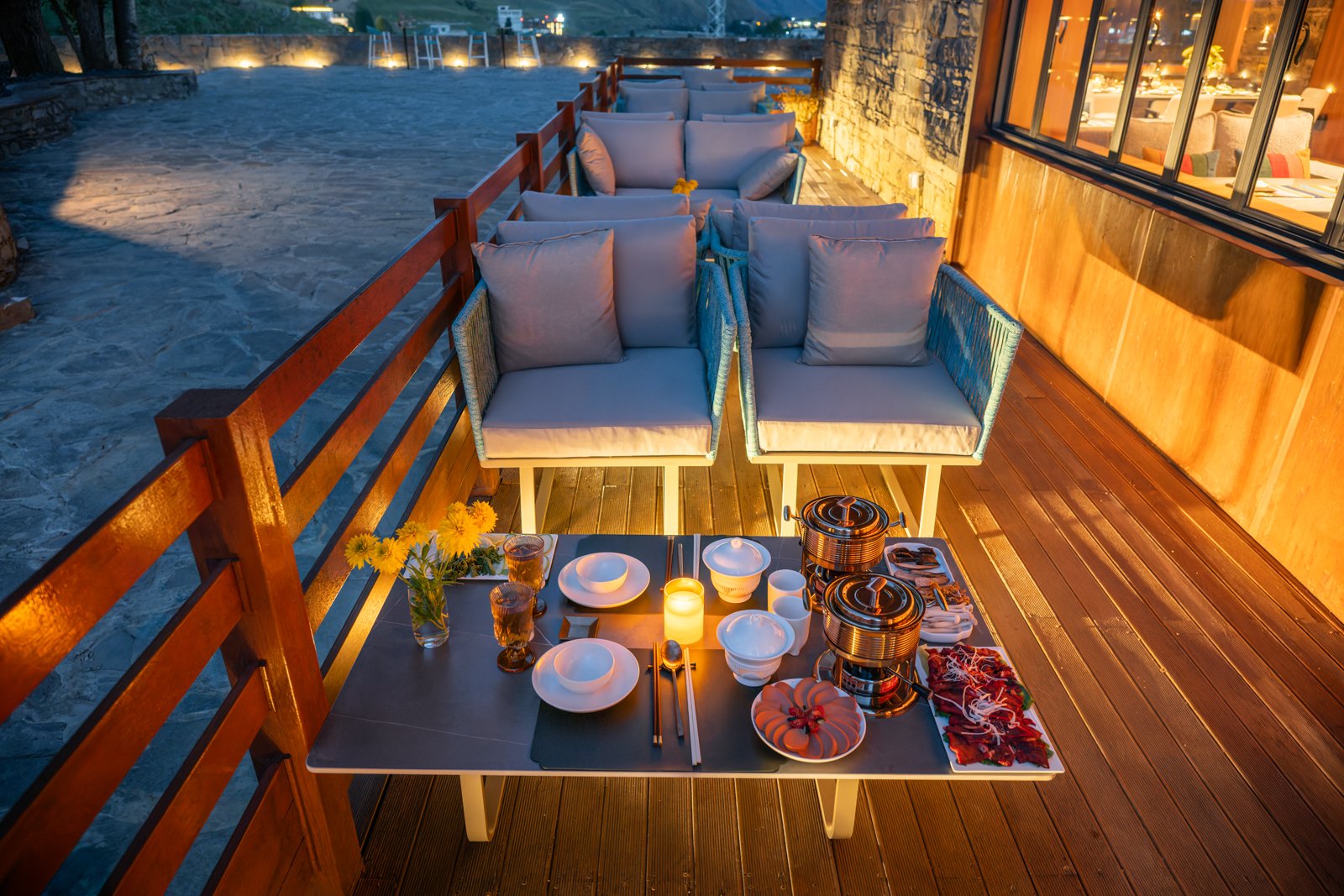
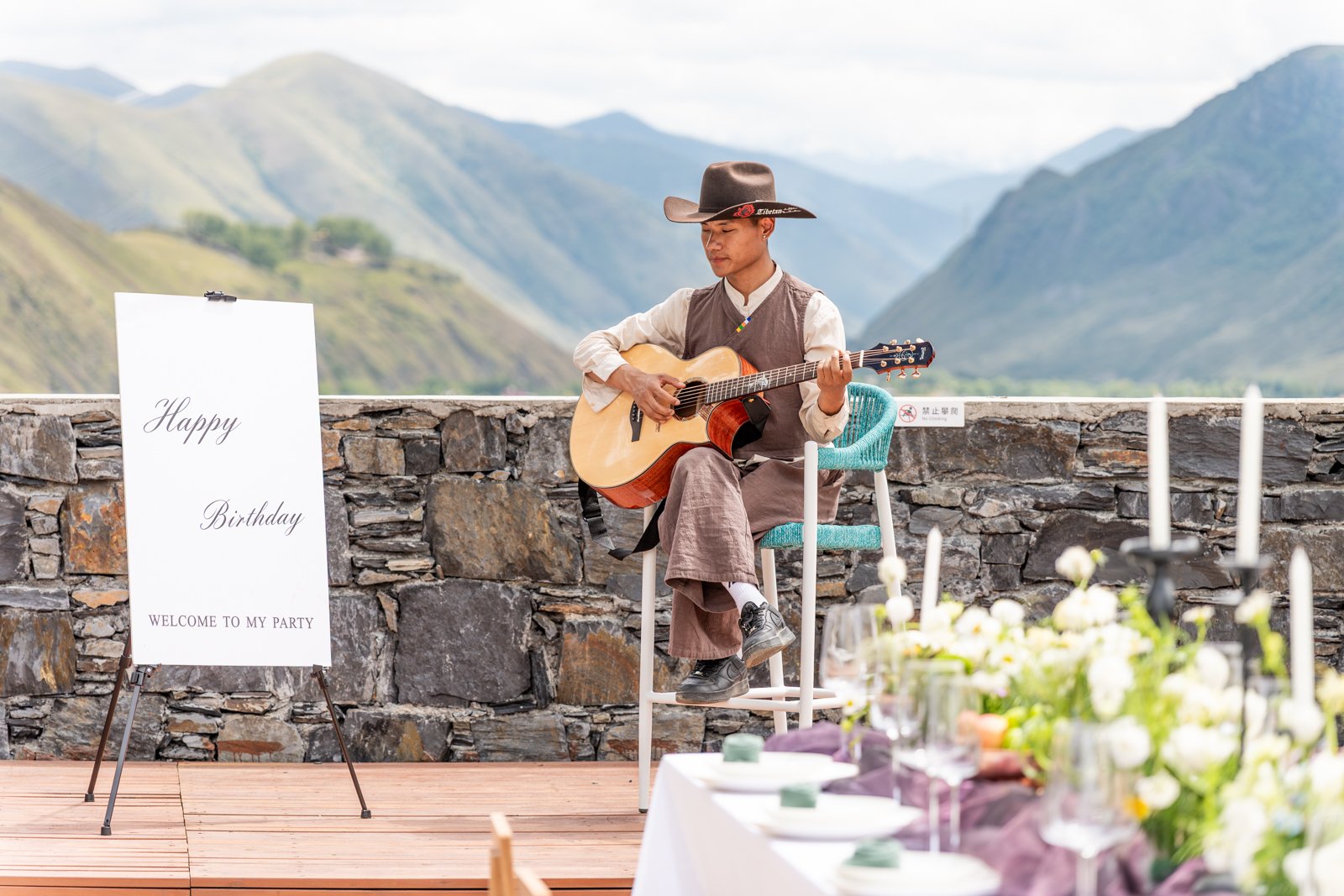
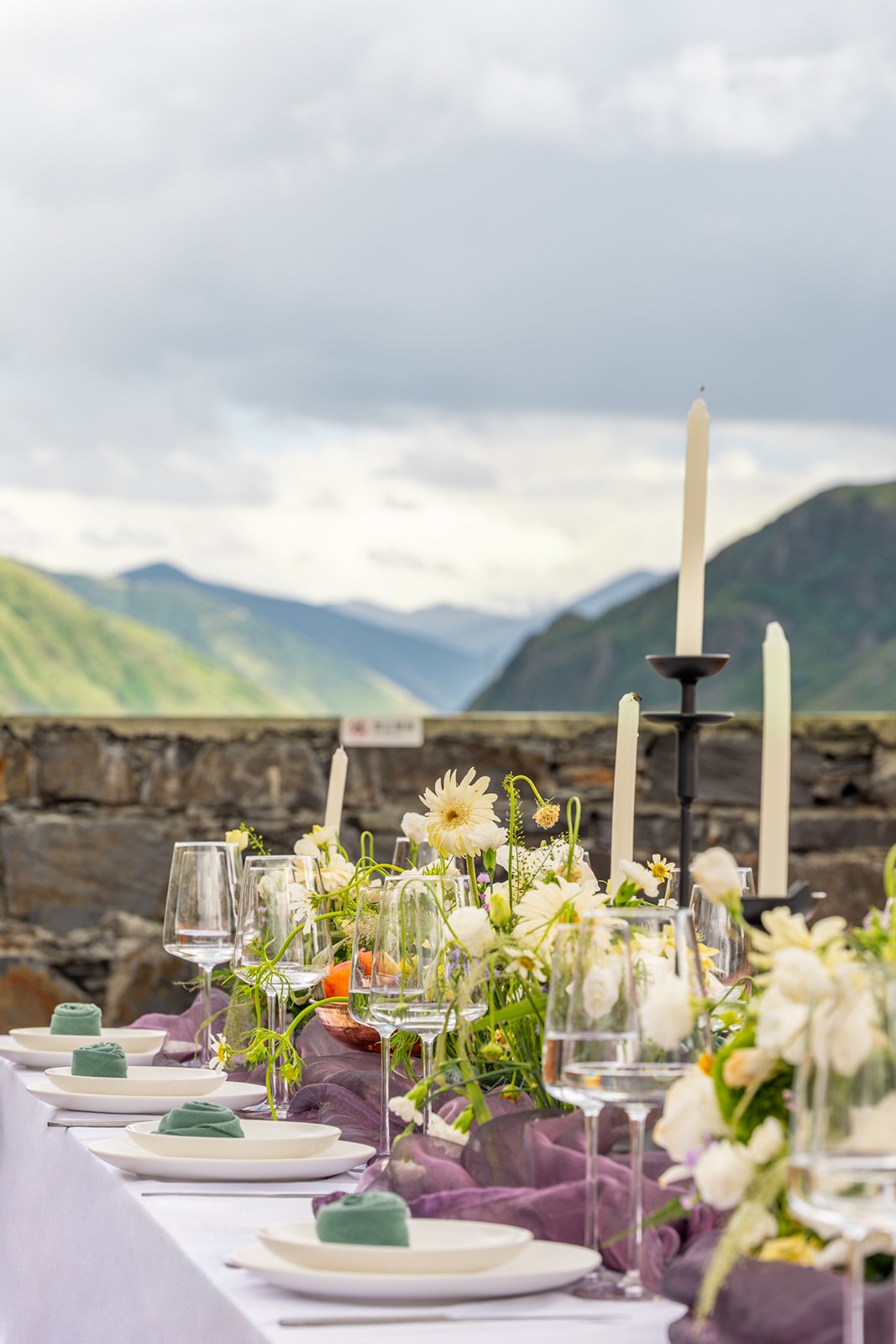
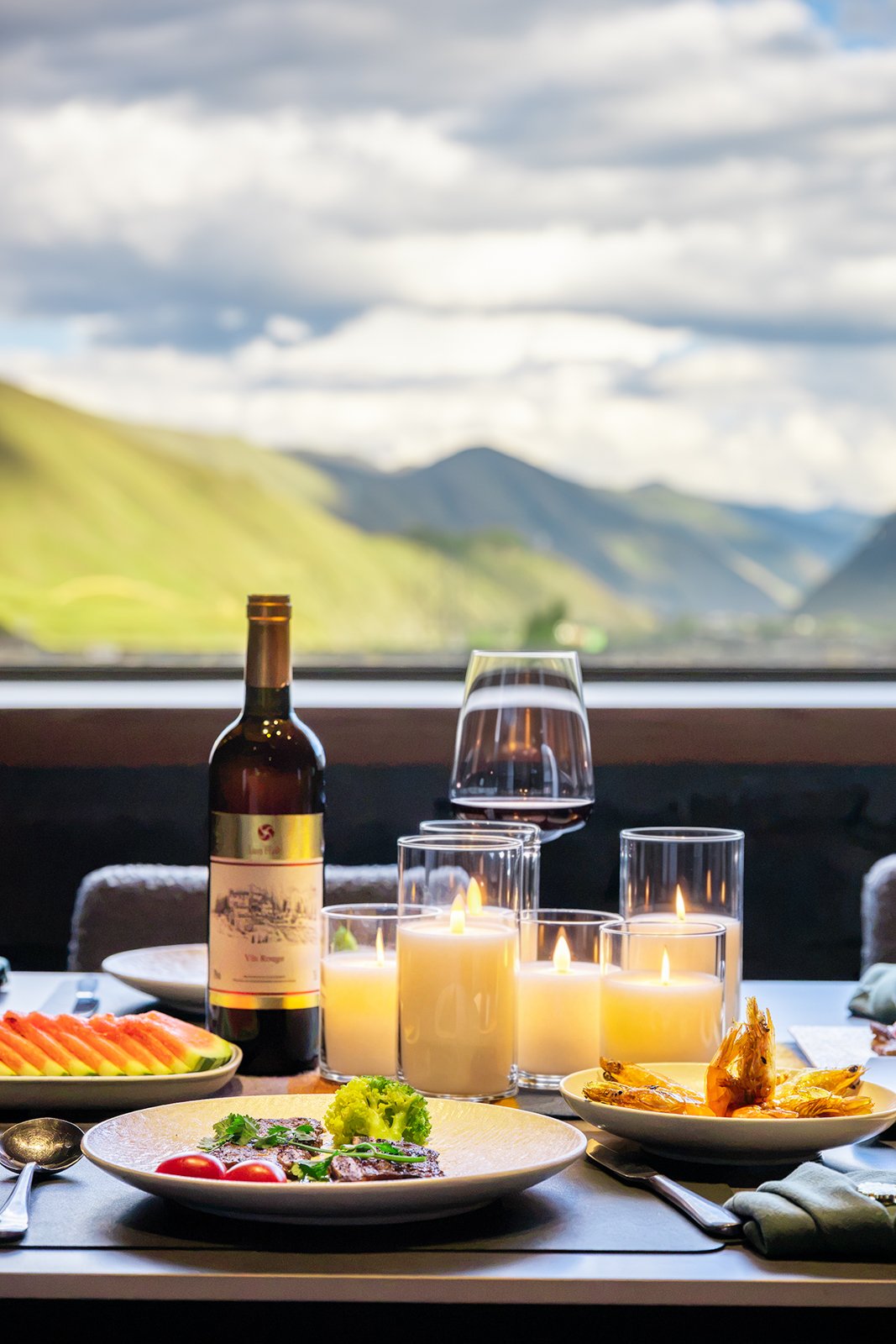
As the light dropped, the hotel transformed. The terrace was set for dinner – long table, white linen, candles, flowers – with the mountain fading from gold to blue to black in the background. The staff moved quietly, adjusting glasses, lighting candles. I photographed the preparations, then the empty table, then the first guests arriving.
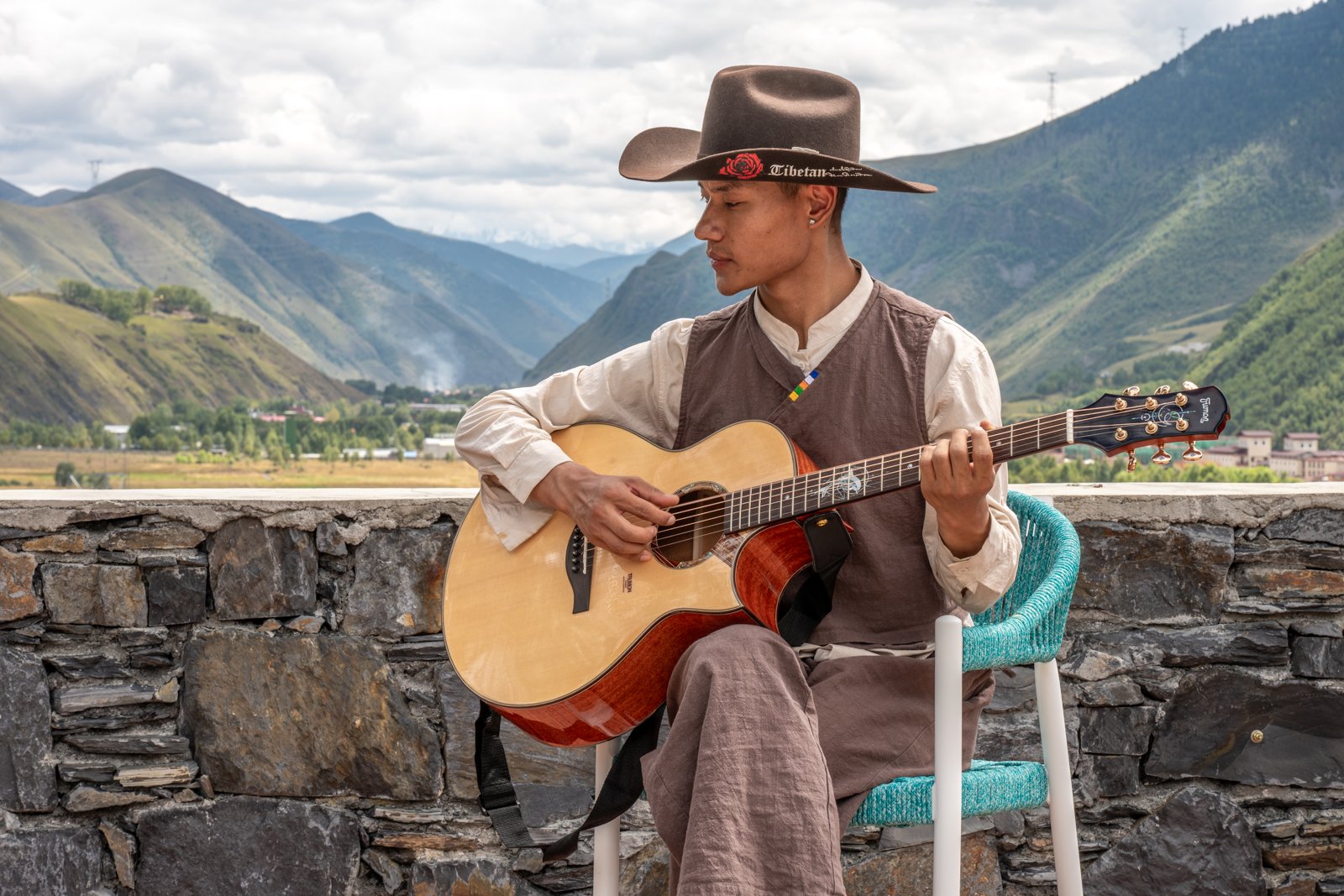
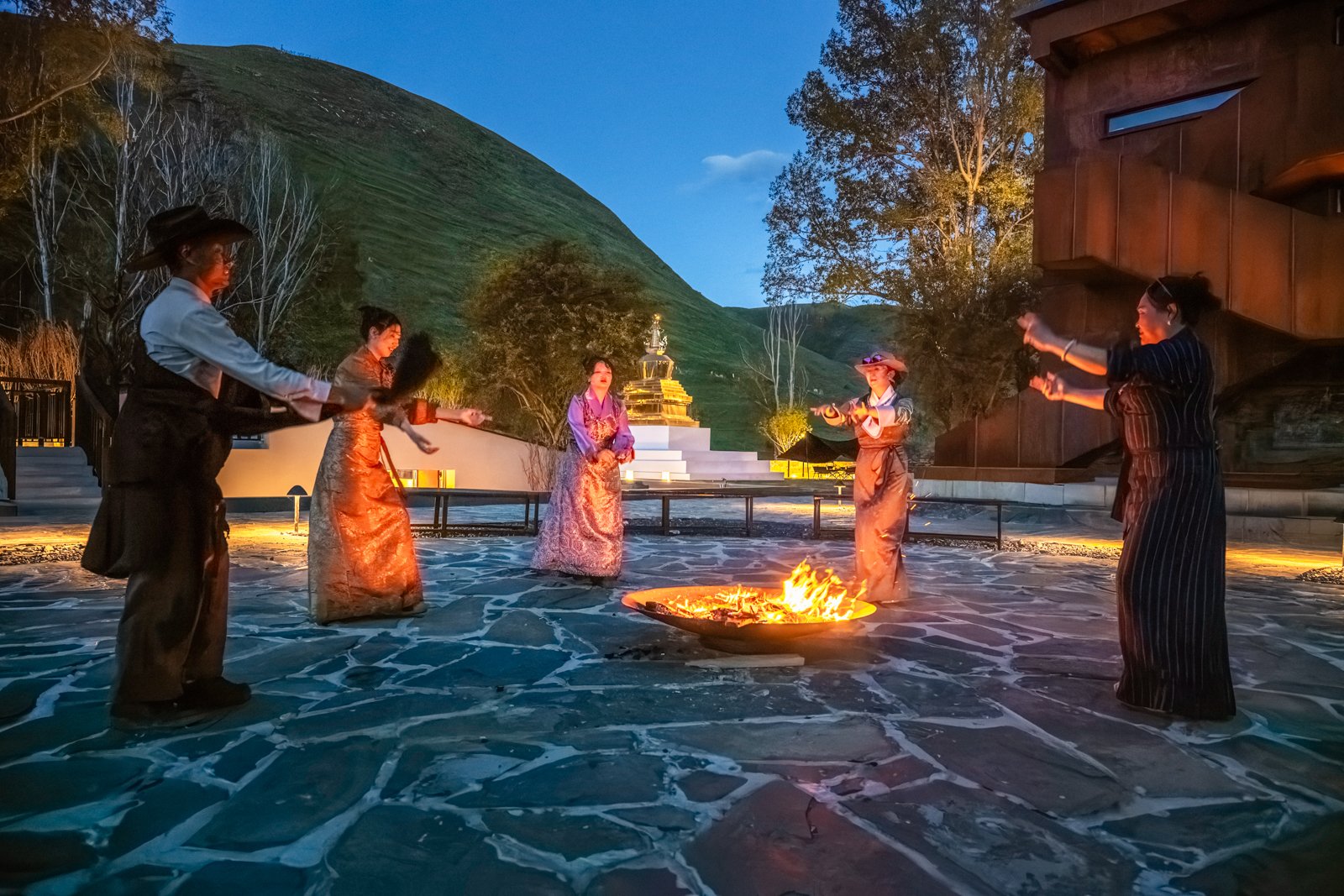
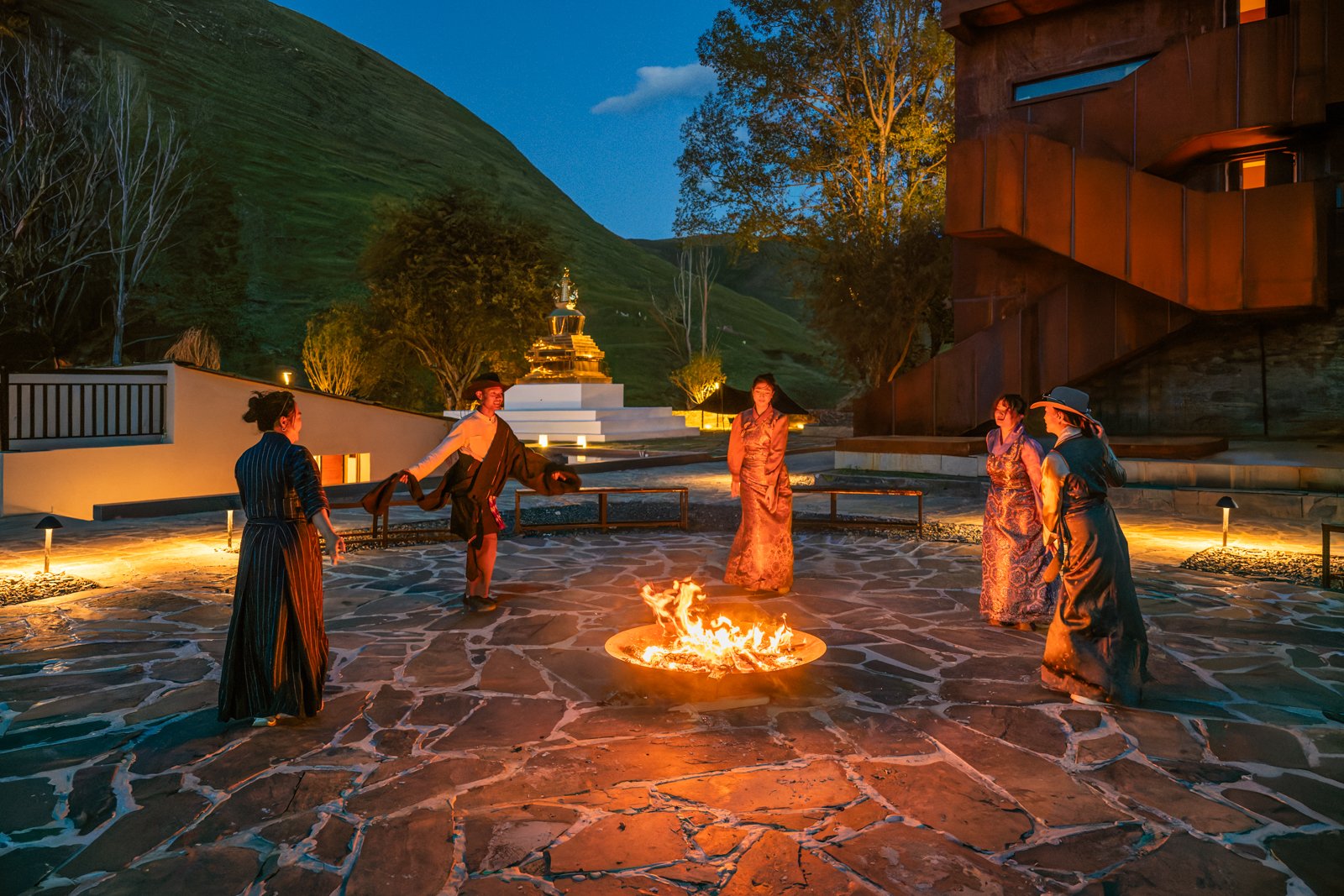
After dinner, a bonfire was lit in the courtyard below. Someone played guitar. Others danced — not performance, just movement around the flames. The light was unpredictable, shifting with the fire, casting long shadows on the stone ground. I used a slower shutter, let the motion blur, kept the fire sharp. The images feel alive in a way that posed photography rarely does.
The Morning
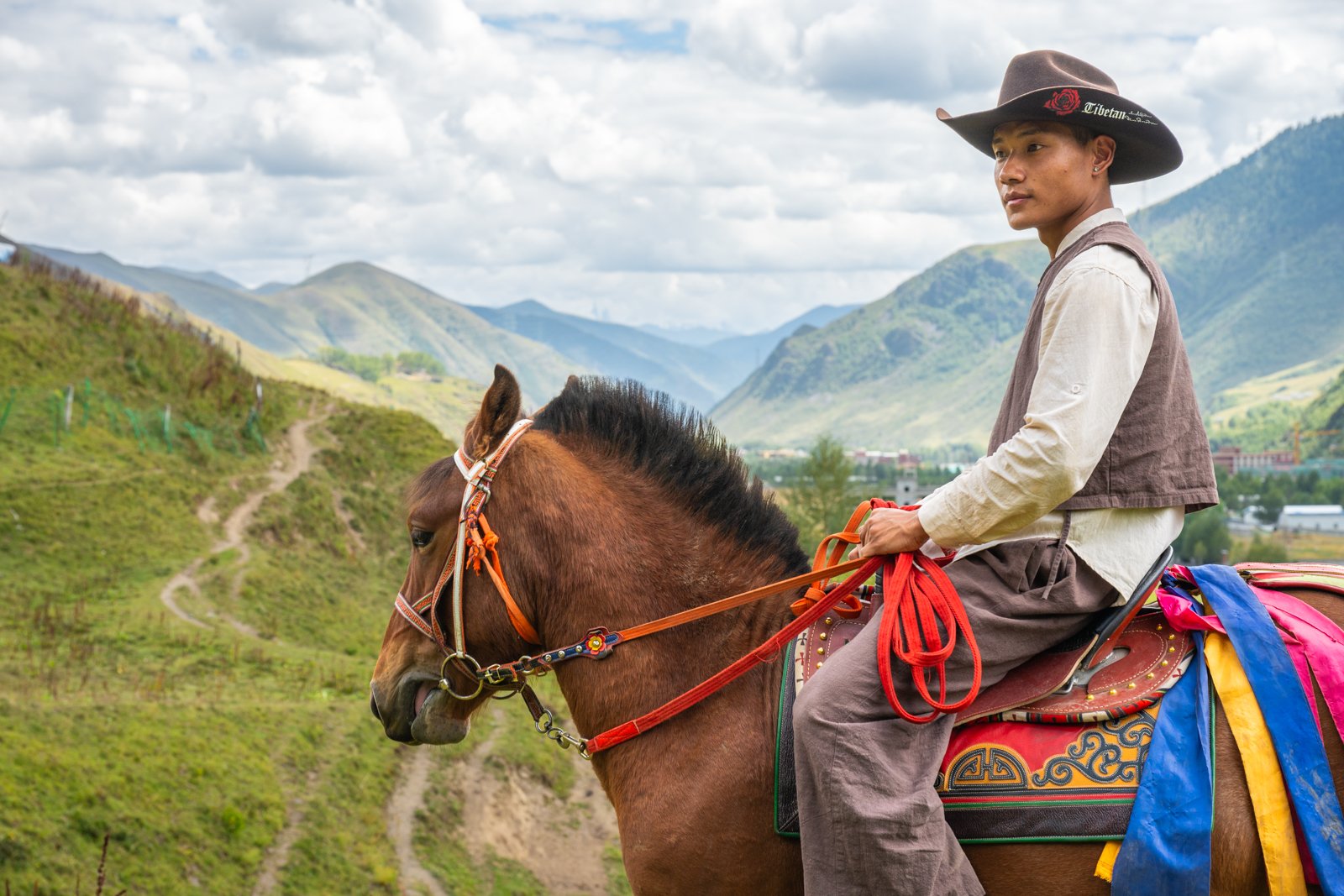
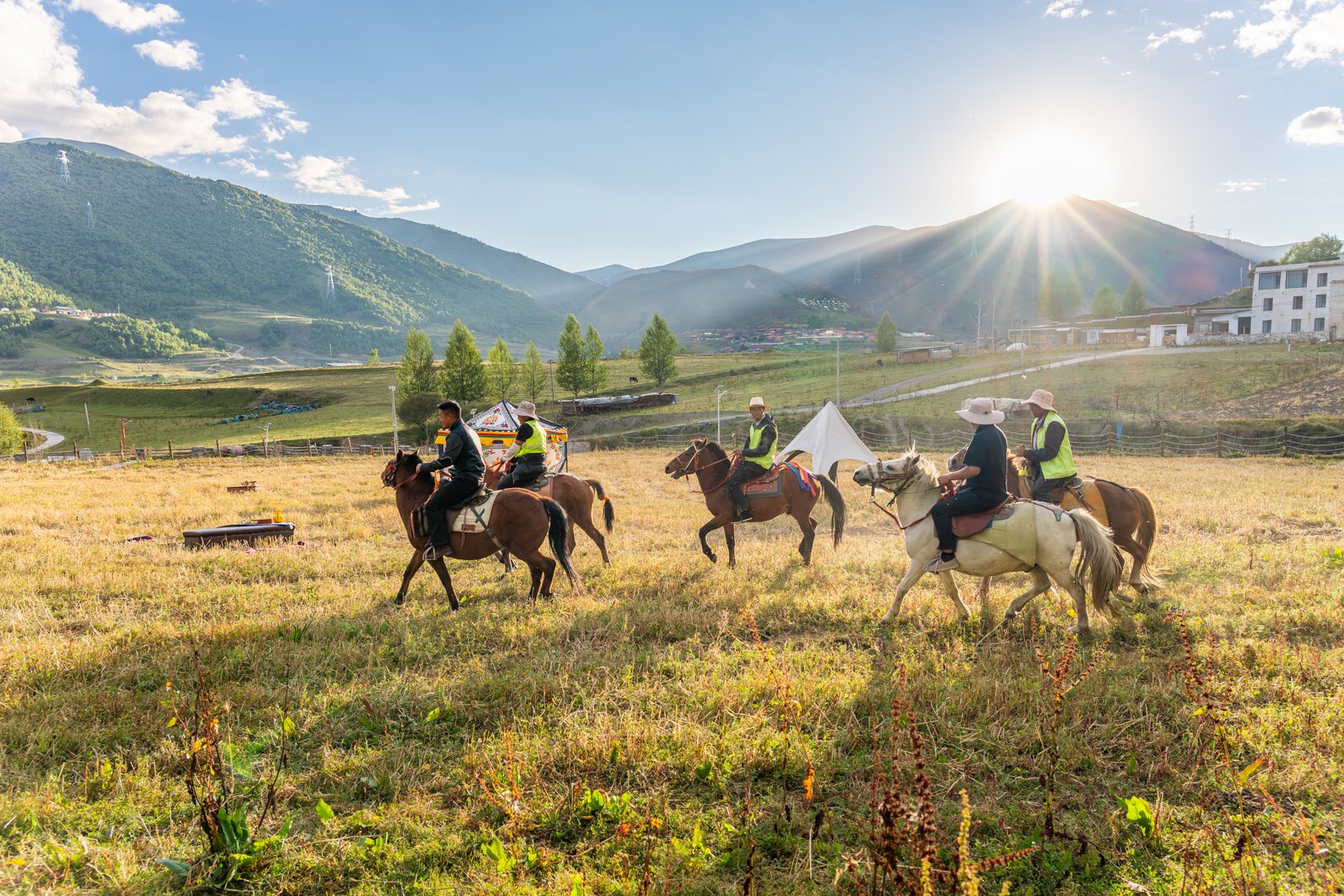
The next day, we shot the horse experience – guests riding through the meadow behind the hotel, the sun low behind Gongga, dust rising from the hooves. The horses wear traditional Tibetan saddles with bright woven blankets. The riders wear whatever they brought.
It was the simplest part of the shoot, and perhaps the most honest. A hotel can build walls and import furniture, but it cannot manufacture this landscape. Gudao seems to understand that. The luxury it offers is not escape from the place, but immersion in it.
What Stays
I left with three distinct impressions:
The building, which respects its site without becoming invisible.
The service, which creates moments – the candlelit table, the fire, the guitar – without forcing them.
And the mountain, which remains the true subject of every photograph, whether it fills the frame or appears as a sliver through a window.
Gudao Hotel doesn’t compete with Gongga. It hosts it.
Location : Xinduqiao, Kanding, Sichuan province, China
Camera :
• Nikon Z6 III
Lens :
• Nikon 14-30mm F/4
• Nikon 24-120mm Z f/4
You can order prints on my Prints page or by clicking the photos and the purchase link for my Getty Images exclusive photos and then choose “Buy the print”.

You might also like


Leave a reply