

There’s a new place in Chengdu that doesn’t whisper – it resonates.
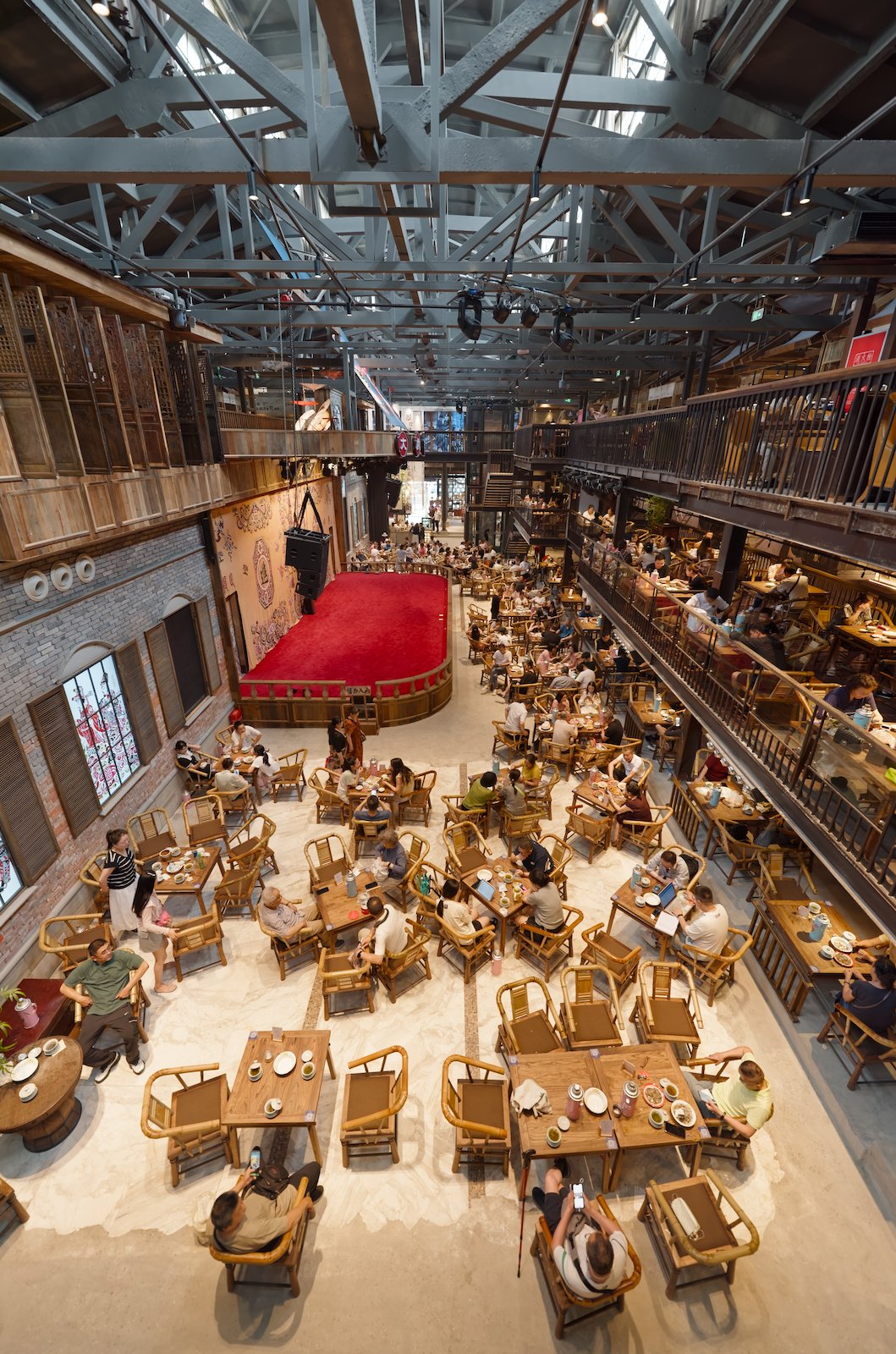
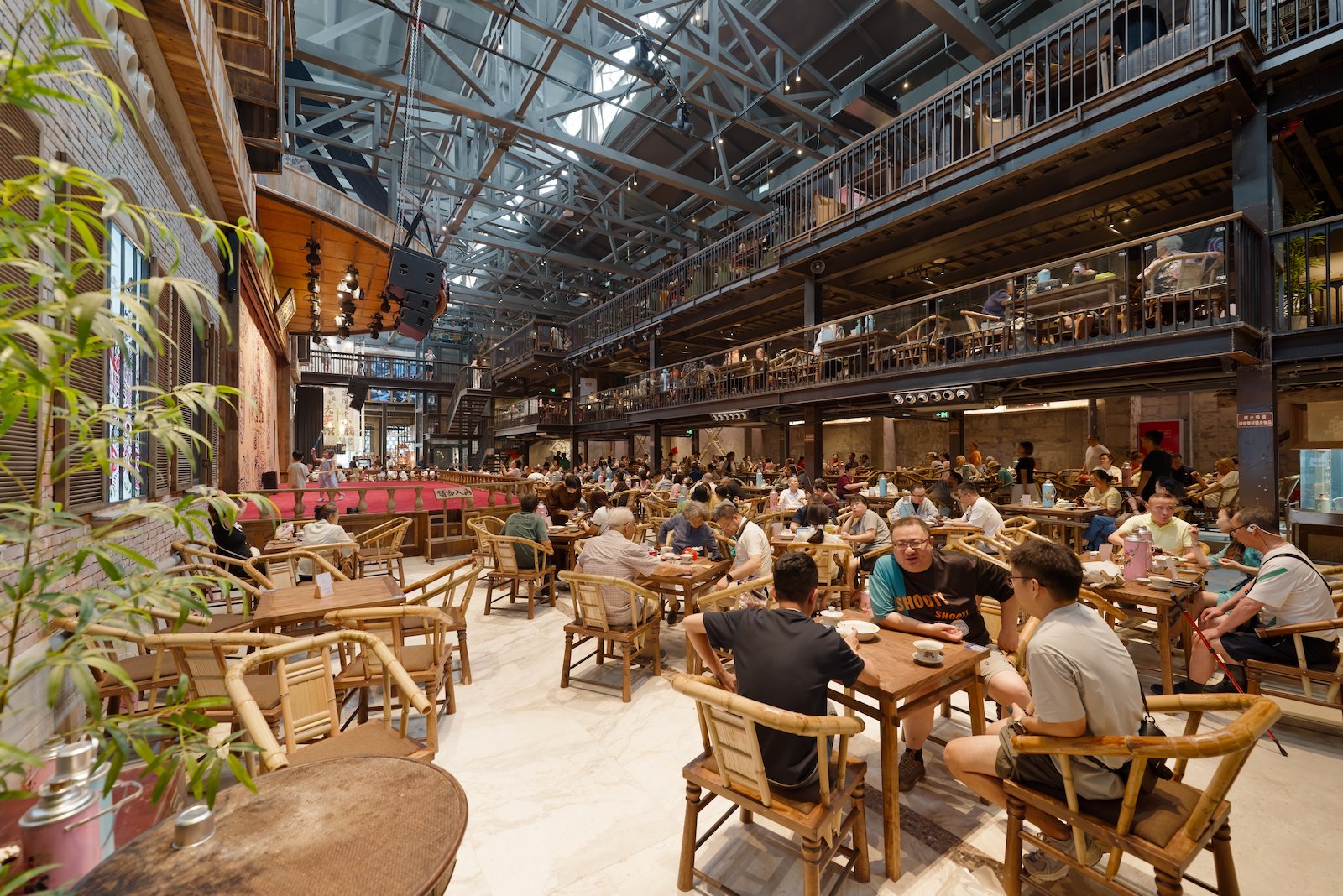
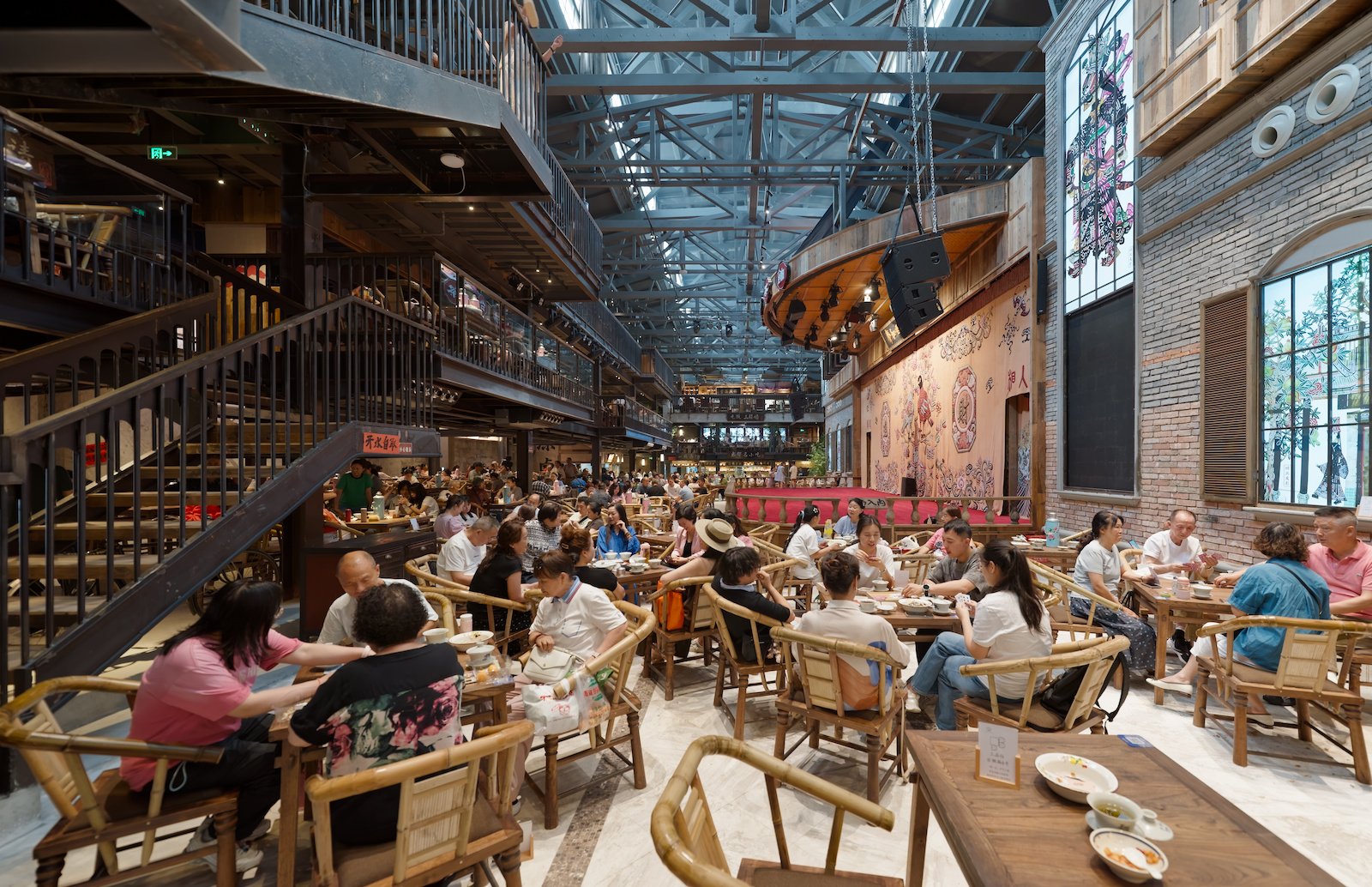
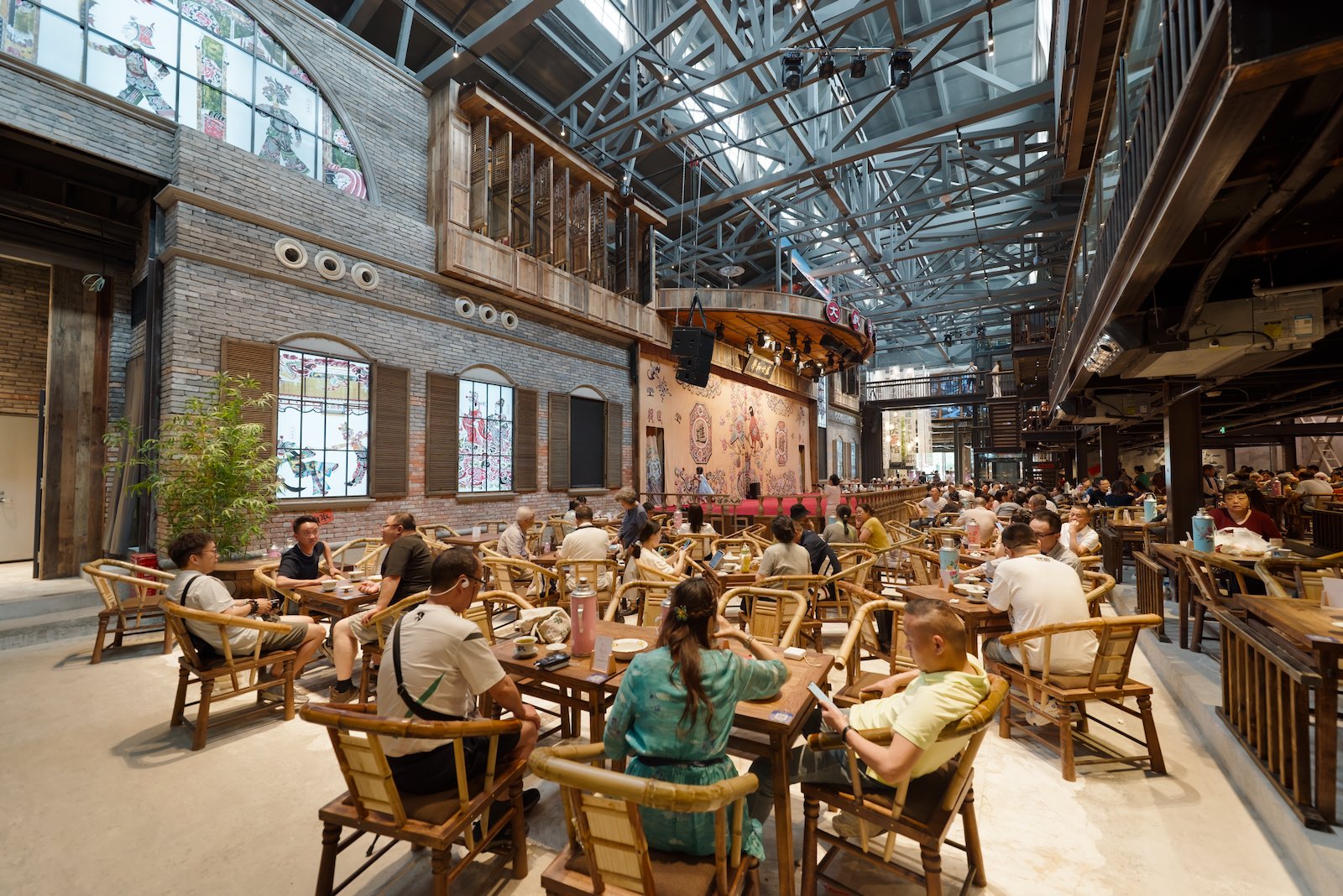
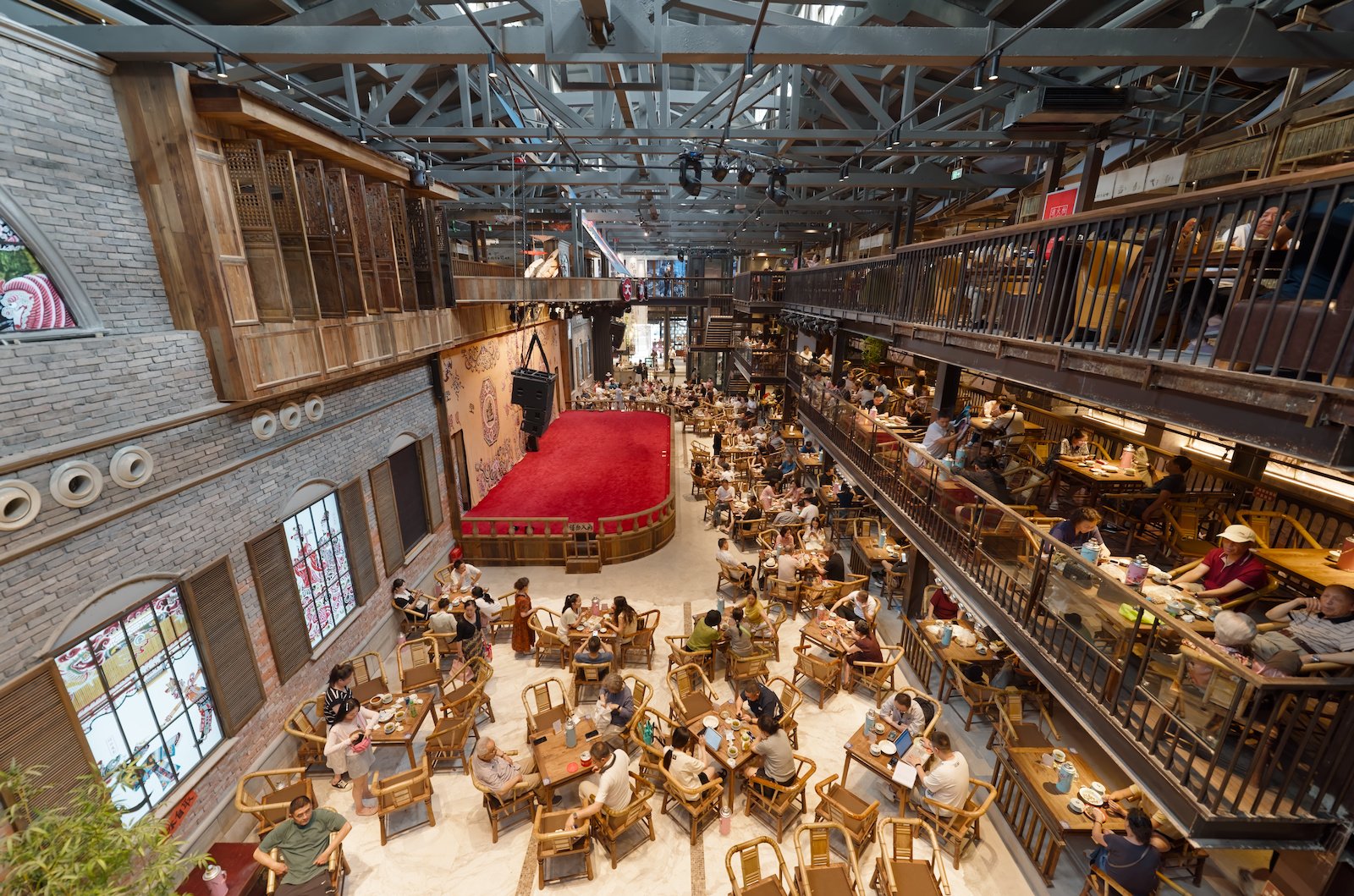
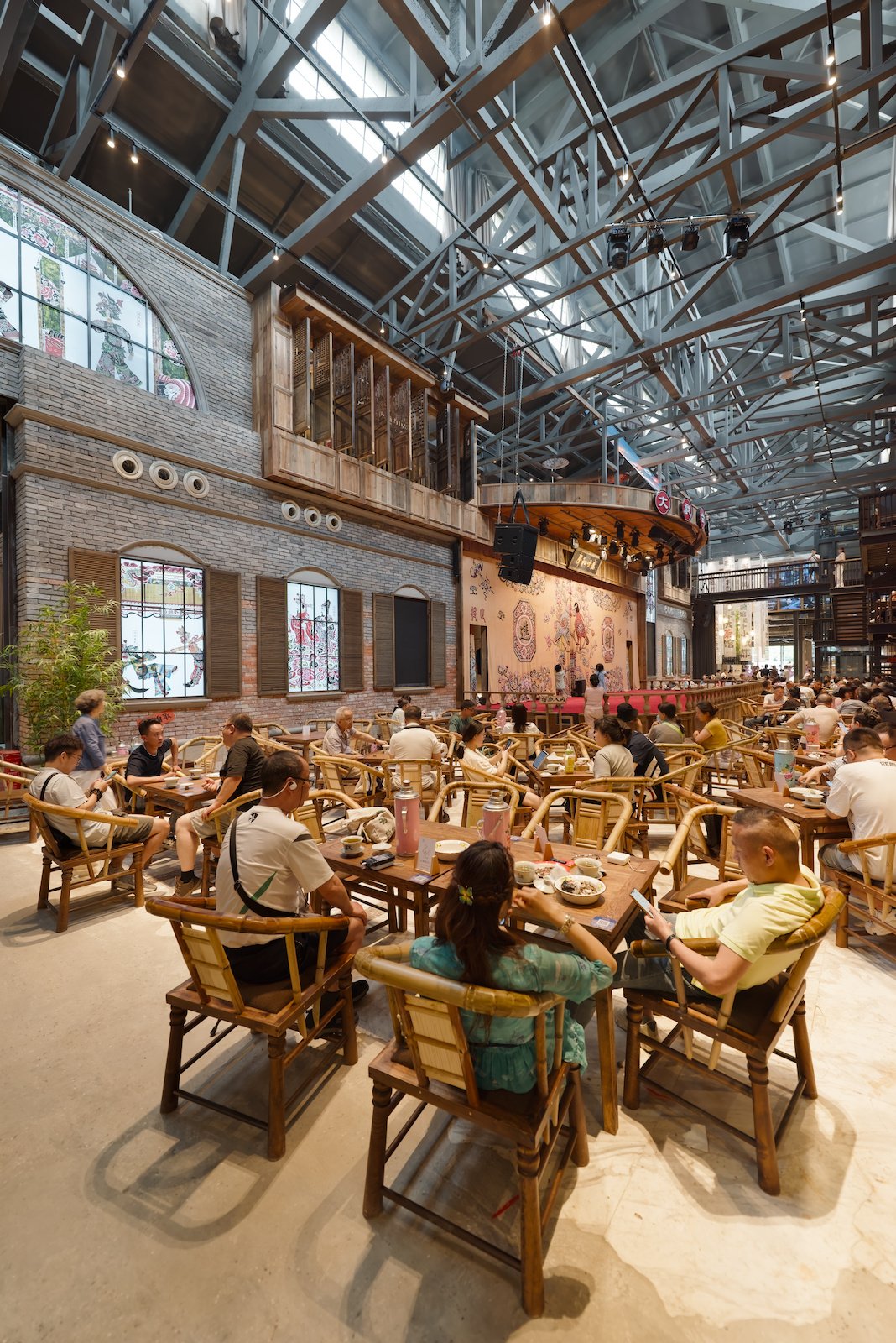
At Daxitai Teahouse (大戏台茶馆), opened in late May 2026 inside DongJiaoJiYi’s repurposed factory complex, the scale is the first thing that strikes you. The ceiling soars. Steel trusses crisscross overhead like the ribs of some great industrial creature. And beneath them, hundreds of bamboo chairs are arranged in democratic disorder \- families, elders, tourists, all sharing the same wooden tables, the same thermos bottles, the same gaiwan tea starting at nine yuan.
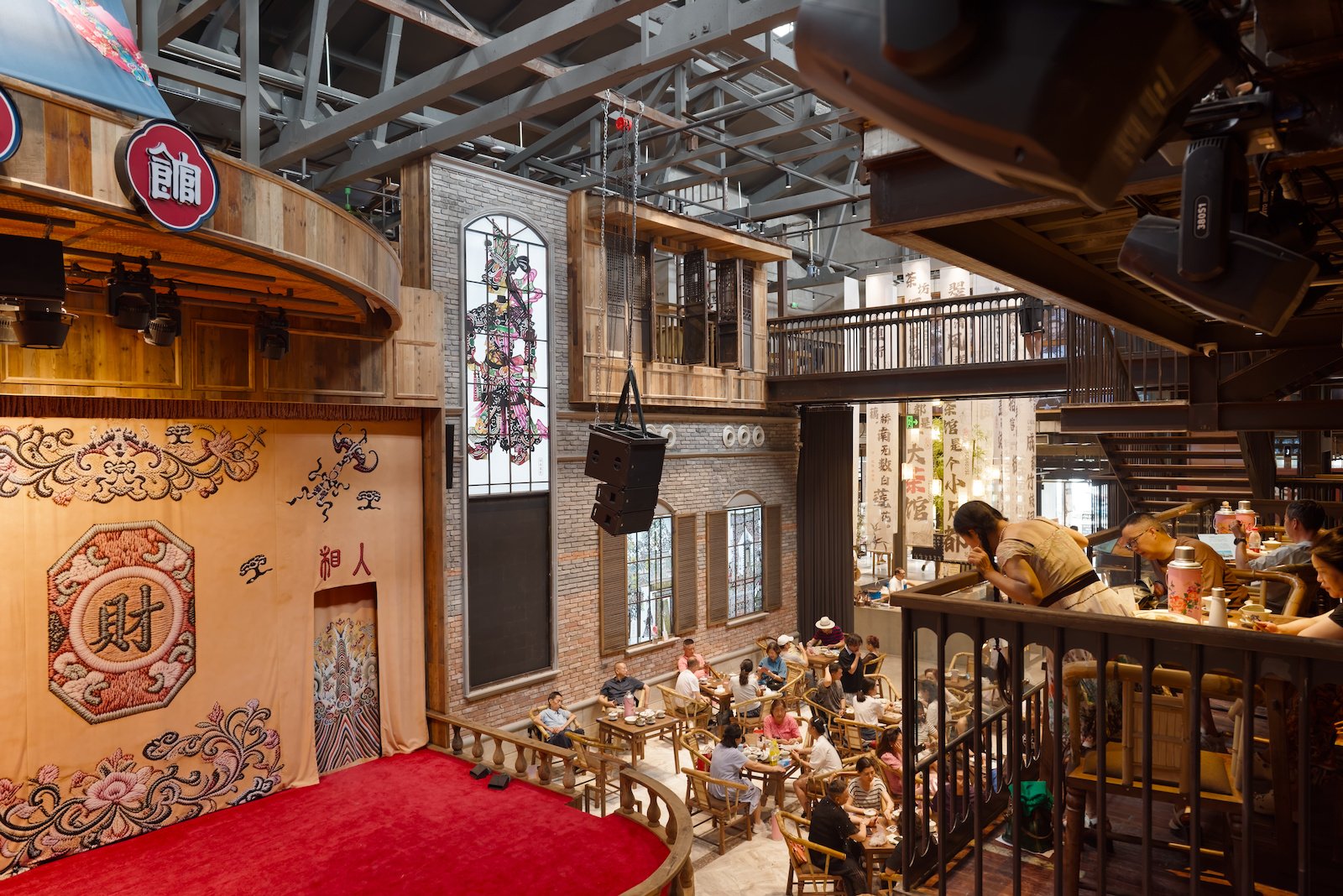
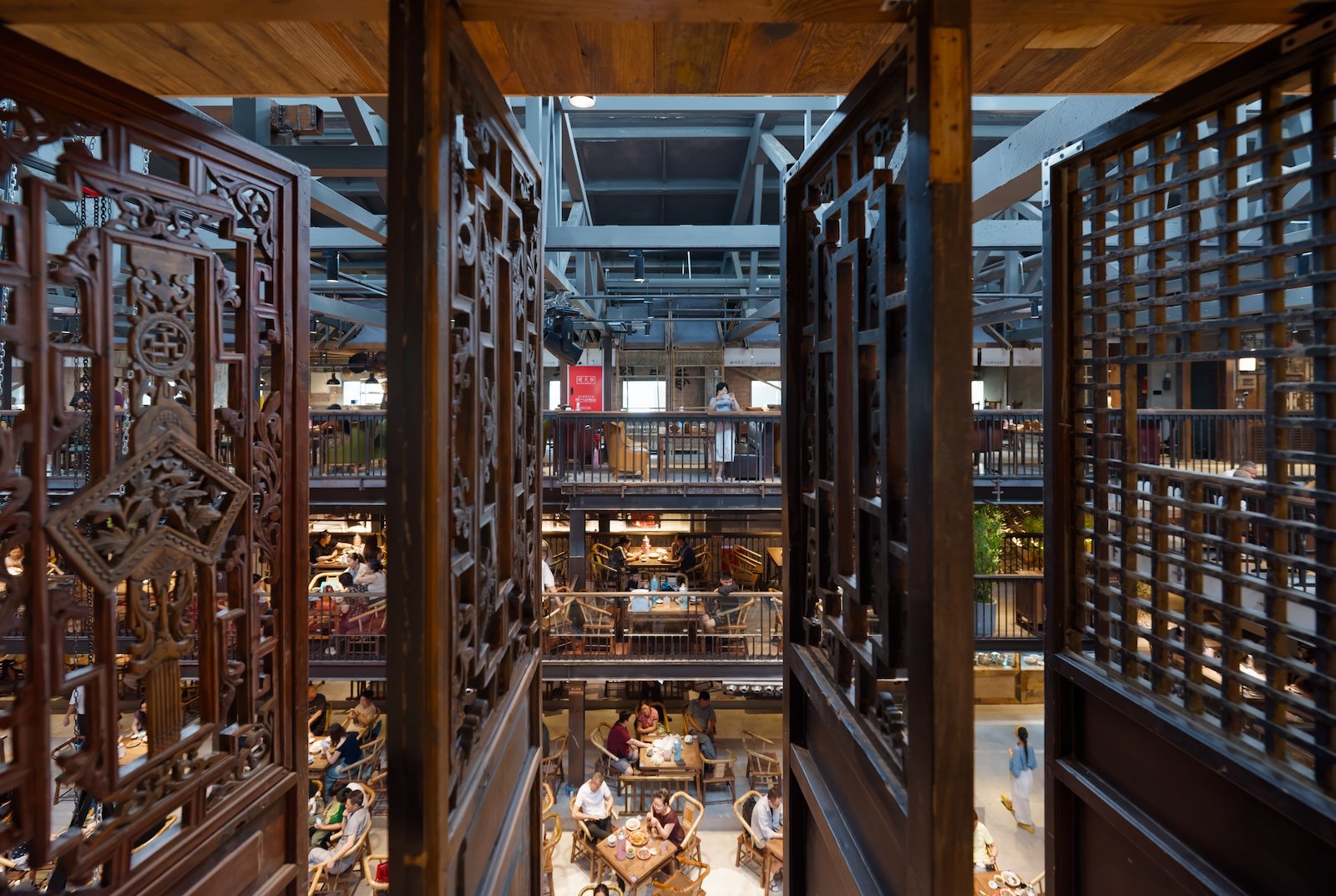
The architecture follows its own logic: forty percent industrial brutality, thirty percent Sichuan heritage, thirty percent Shanghai refinement. Exposed concrete and iron staircases share space with carved wooden lattice screens and stained glass windows depicting opera figures. It’s a conversation between eras that somehow avoids argument.
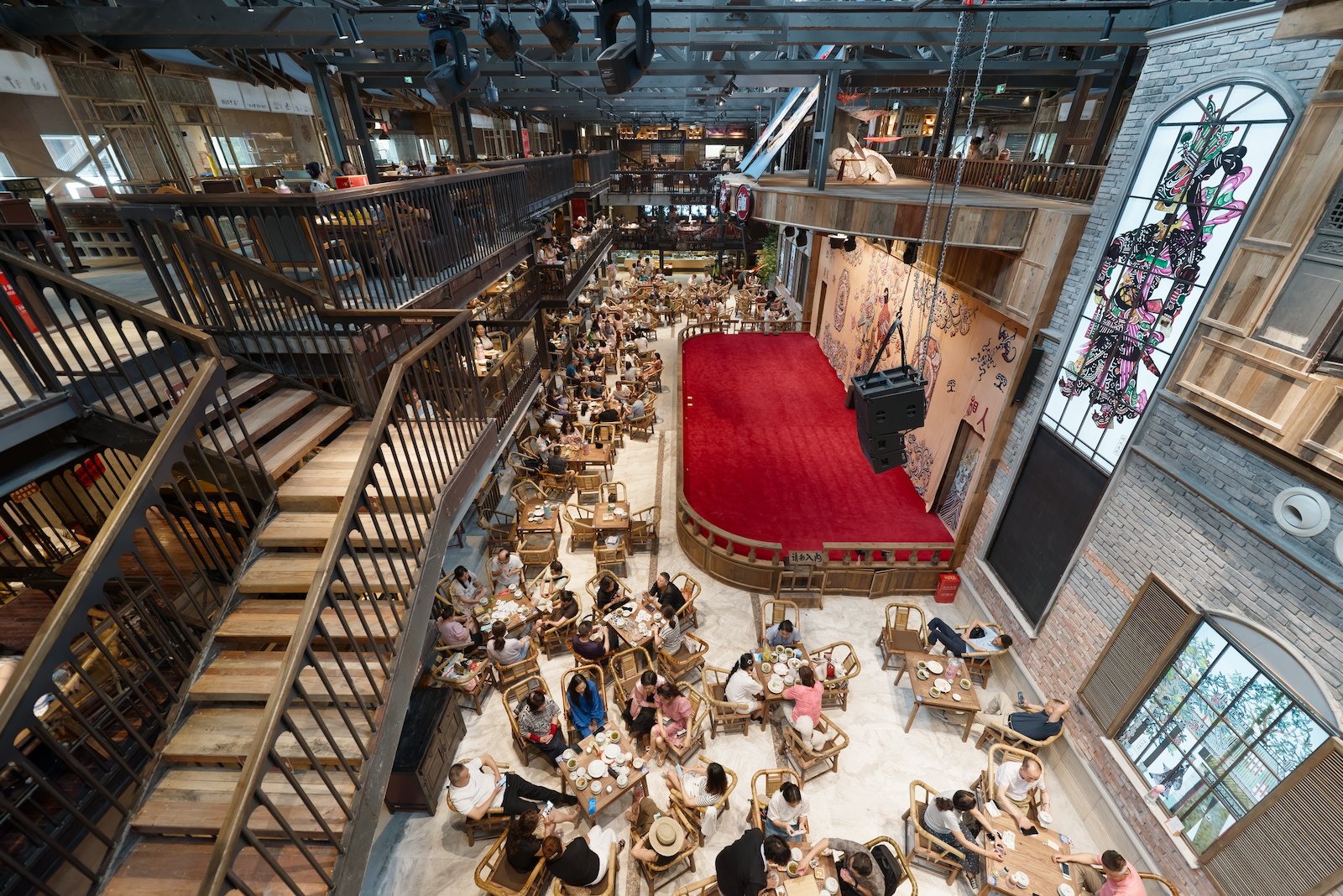
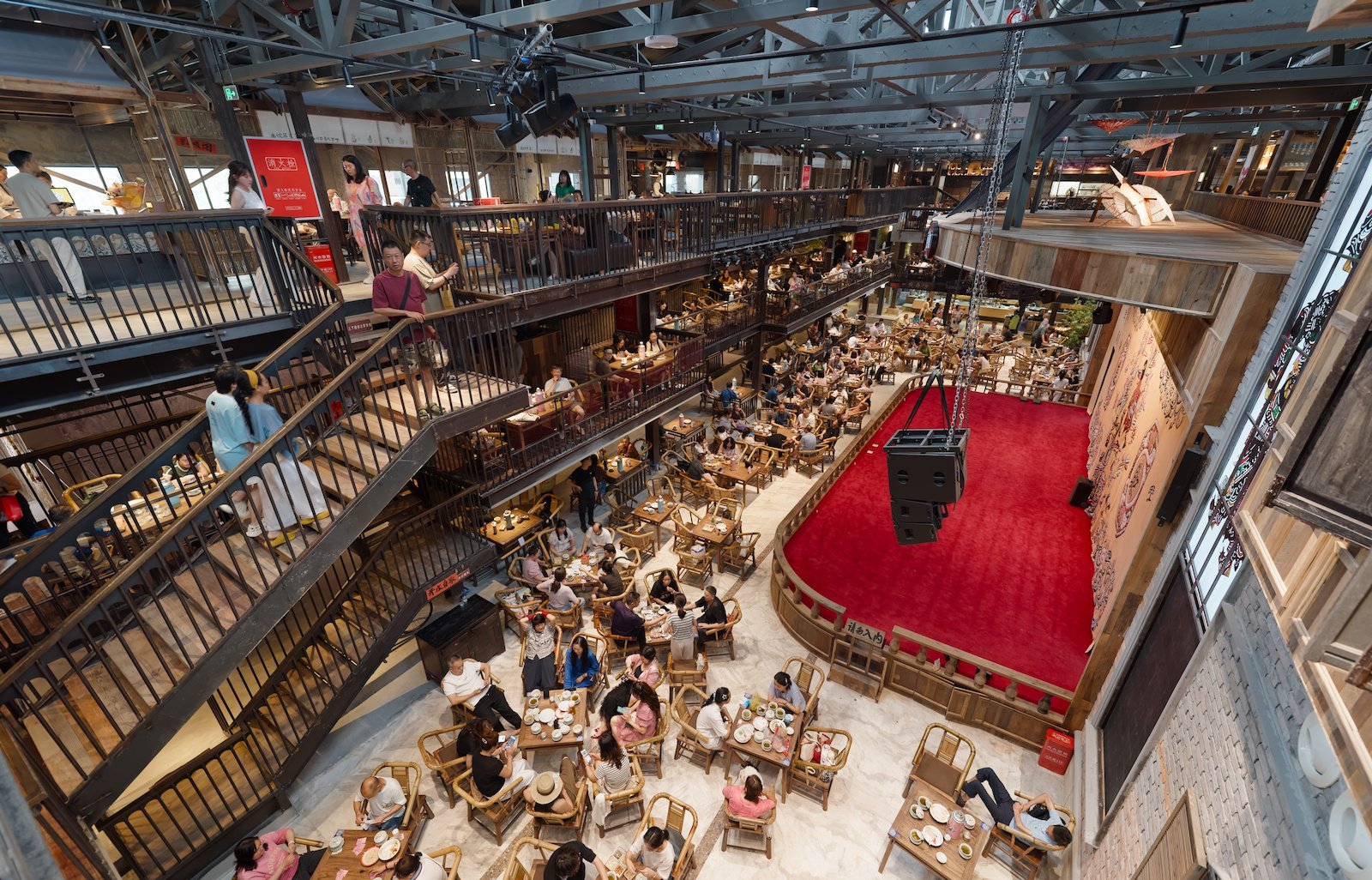
The heart of the space is the red stage – a circular platform that dominates the main hall like a theatrical altar. From the upper walkways, it becomes a geometric island floating in a sea of bamboo and steel. This is where Sichuan opera unfolds: face-changing, fire-spitting, shadow puppetry – transforming the teahouse from a casual drinking spot into a living performance venue for roughly eighty minutes.
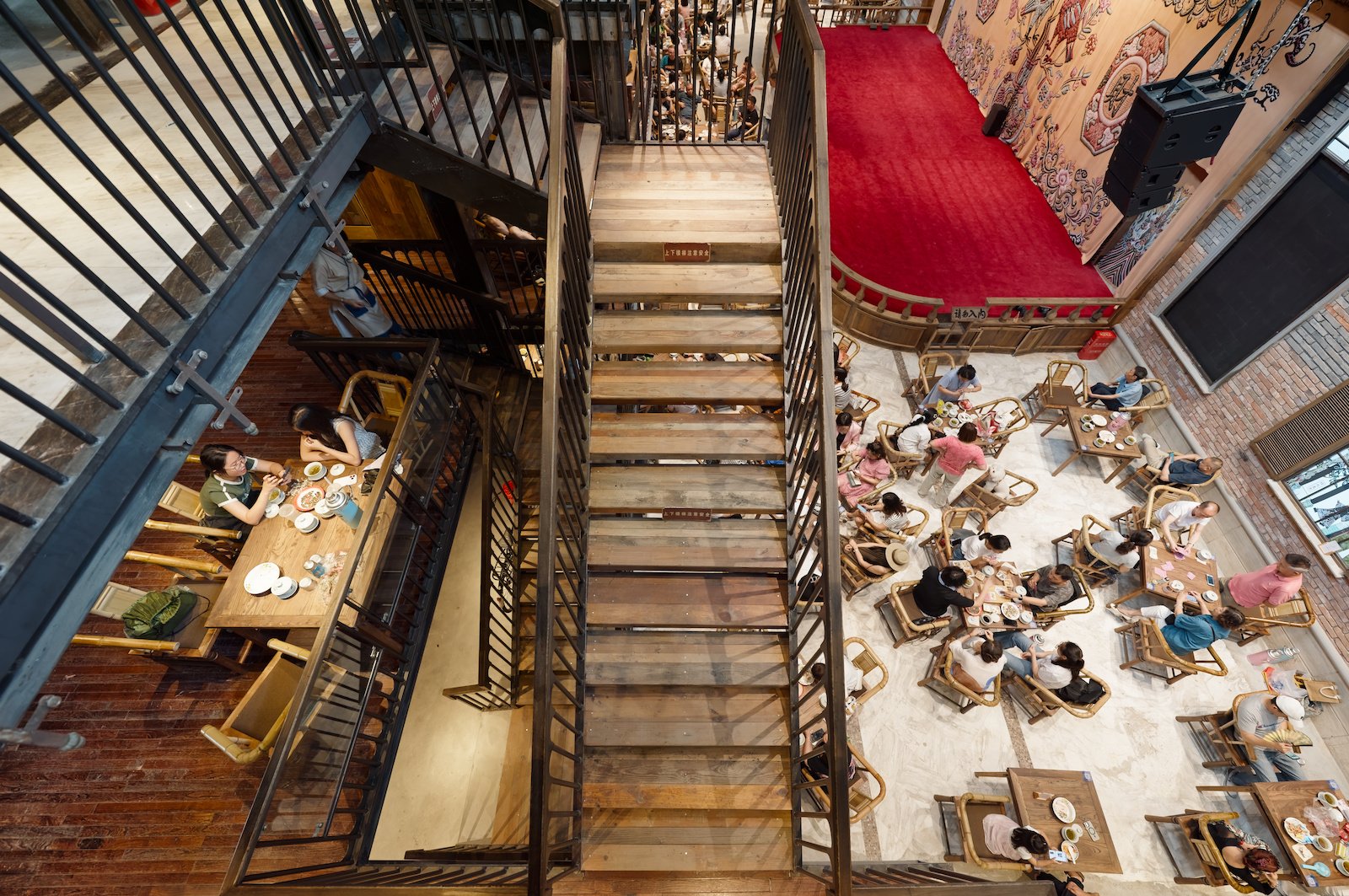
But what stays with you isn’t the spectacle. It’s the verticality. Three levels of balconies and walkways mean every perspective is different. Look down from above and the teahouse becomes a pattern – chairs, tables, bodies, all arranged in repeating rhythms that break only where humans interrupt them. Look up and the steel ceiling dissolves into skylights that filter daylight onto the brick walls below.
The space shifts throughout the day. Morning brings a quiet, familial energy – tea, conversation, the clink of porcelain. Evening introduces the opera, the crowd, the performance. And after nine pm, the teahouse transforms again into something else entirely – a tavern, a late-night social space where the tea gives way to something stronger.
What makes Daxitai special is the same thing that defines Chengdu itself: the ability to hold contradiction without resolving it. Industrial and intimate. Traditional and theatrical. Public and deeply personal. A space that demands to be looked up at, then down into, then through.
If you visit, go when the light filters through the roof – early afternoon, before the crowds peak. The mix of cool daylight and warm interior lighting creates a depth that disappears once the space fills and artificial lights take over.
A few minutes from the center of Chengdu, but a world apart in scale.
Location : Chengdu, Sichuan province, China
Camera :
• Nikon Z5
Lens :
• Nikon 14-24mm F/2.8
You can order prints on my Prints page or by clicking the photos and the purchase link for my Getty Images exclusive photos and then choose “Buy the print”.

You might also like



Leave a reply